


What is the current price of Succinct?
The current price of Succinct is $0.1856 with a 2.71% change in the last 24 hours.
Supply and ATH/ATL data provided by CoinGecko

Hyperliquid perpetuals only. One snapshot every 5 minutes, up to 20 returned price levels per side. Liquidity beyond those levels is unknown. This is not a liquidation heatmap or a fill estimate.
Loading recorded snapshots…
Prices and notionals are USD-equivalent venue units, with USDC collateral. No currency conversion is applied. Notional = venue price × base-asset size. Contract specifications
Derivatives and mapped ecosystem data, with source timings and coverage.
Succinct builds infrastructure for zero-knowledge proofs. Its two core products are SP1, an open-source zero-knowledge virtual machine that proves the execution of ordinary Rust programs, and the Succinct Prover Network, a marketplace that matches applications needing proofs with independent operators who have the hardware to produce them.
PROVE is the network's native ERC-20 token on Ethereum, at contract address 0x6bef15d938d4e72056ac92ea4bdd0d76b1c4ad29. It is the unit applications pay in when they request a proof, the asset provers stake as collateral against their promise to deliver, and the asset that carries governance weight in the protocol.
The problem Succinct addresses is straightforward. Generating a zero-knowledge proof is computationally expensive and needs specialized hardware, so most teams that want proofs cannot practically produce them in-house. Succinct turns proving into a service that can be bought rather than built.
Official sources:
Succinct Labs was founded in 2022 by Uma Roy and John Guibas, and is based in San Francisco. The company raised a combined 55 million dollars across a seed and Series A round led by Paradigm, with participation from investors including Robot Ventures, Bankless Ventures, Geometry, and ZK Validator.
The company's early work centered on SP1, released as an open-source zkVM designed to be performant enough to compete with hand-written circuits while letting developers write normal Rust. In 2025 Succinct introduced SP1 Hypercube, a redesigned prover the company said could prove Ethereum blocks in roughly twelve seconds, and in August 2025 it launched the Succinct Prover Network on mainnet alongside the PROVE token.
Succinct operates in two distinct layers.
SP1, the zkVM SP1 takes a compiled Rust program and an input, executes it, and produces a succinct cryptographic proof that the execution happened correctly. A verifier can check that proof in a fraction of the time the original computation took, and without re-running it. This is what lets a rollup, a bridge, or a light client compress heavy computation into something an on-chain contract can verify cheaply.
The Prover Network The network is a two-sided marketplace coordinated by contracts on Ethereum. A requester submits a proof request with the program, the input, a deadline, and a maximum price. Provers compete in what Succinct calls proof contests, an auction where operators bid the price at which they will fulfill the request, and the work is assigned to a competitive bid. The winning prover generates the proof and submits it for verification, and payment settles in PROVE.
Because assignment is competitive and delivery is bonded by stake, the design aims to push proving costs toward the true marginal cost of the hardware rather than a single vendor's list price.
PROVE has four documented roles:
Staking uses a nested vault structure. PROVE is first deposited into a global ERC-4626 vault that mints iPROVE. That iPROVE is then deposited into a prover-specific vault that mints stPROVE, the staker's liquid receipt. The prover vault holds the iPROVE, which is what gives the prover governance weight, while the staker keeps a transferable claim. Rewards accrue passively as the vault's share price rises. Unstaking is not instant: a staker calls a request function that begins a waiting period before withdrawal.
Slashing runs through the same structure. If a prover fails to deliver within the agreed deadline, the settlement layer files a slashing request against that prover's staked iPROVE, and the reduction is shared proportionally by everyone staked to that prover. Delegation is therefore an active risk decision, not a passive yield product.
A live read of the token contract returns a total supply of one billion units with 18 decimals.
The combination is what stands out. Several teams build zkVMs and several build proving services, but Succinct pairs a widely adopted open-source zkVM with an open market for the compute that runs it. Because SP1 is open source, a prover on the network is not locked into proprietary tooling, and because the network is permissionless, hardware operators can join without a commercial agreement.
The economic design is also unusual for infrastructure. Proving capacity is a physical good, and Succinct prices it by auction with bonded delivery rather than by subscription, which is closer to how spot compute markets work than how most crypto infrastructure is sold.
Compared with a Layer 2 that operates its own in-house prover, Succinct sells proving as a horizontal service that many chains can buy, rather than tying capacity to one rollup.
Compared with general-purpose decentralized compute networks, Succinct is narrow on purpose. It proves programs and verifies the result cryptographically, which means correctness can be checked mathematically instead of by reputation or redundant execution.
Compared with a single-operator proving service, the auction and staking mechanism is designed to remove dependence on one vendor. The tradeoff is added protocol complexity and the need for enough independent provers to keep auctions genuinely competitive.
Security has a cryptographic layer and an economic layer. Cryptographically, a valid SP1 proof cannot assert a false execution, so a prover cannot fabricate a result and be paid for it. That property does not depend on how many provers exist or how honest they are.
Economically, the network secures liveness rather than correctness. Staked PROVE and slashing exist to ensure that a prover who accepted a job actually delivers it before the deadline. Settlement, staking, and slashing all run in contracts on Ethereum, so the network inherits Ethereum's security for its accounting.
The residual risks are implementation risks: bugs in SP1 or in a verifier contract, and errors in the vault or governance contracts. These are software risks that audits reduce but do not eliminate.
Zero-knowledge proofs are moving from research into production, and the binding constraint is no longer whether a proof can be generated but whether it can be generated cheaply, reliably, and by someone other than the team that needs it. Succinct matters because it treats proving capacity as a market rather than a moat, and because SP1 lowered the barrier from custom circuit engineering to ordinary Rust.
PROVE trades on centralized exchanges and on decentralized exchanges on Ethereum, with a bridged deployment on BNB Chain at 0x7ddf164cecfddd0f992299d033b5a11279a15929. Availability and pairs vary by jurisdiction.
PROVE has been listed on venues including:
Listing coverage changes over time, so verify on the venue itself.
PROVE can be held on an exchange under that exchange's custody, in a self-custodial Ethereum wallet, or behind a hardware wallet used with a compatible interface. Holders who intend to stake or delegate should use a self-custodial wallet, since staking runs through the protocol's own contracts.
Confirm the network before any transfer. The Ethereum and BNB Chain deployments use different addresses, and sending to the wrong one can result in permanent loss.
You can compare PROVE with related zero-knowledge and infrastructure networks on Coinrithm:
Track Succinct live price, chart, market cap, and volume in real time. Practice mock trading and demo trading for Succinct on CoinRithm before using real money.
Use a crypto paper trading account to demo trade Succinct with real-time prices, AI trade feedback, and trading leagues. Test strategies, learn risk management, and build confidence before trading Succinct with real money.
Read the complete paper trading guideThe current price of Succinct is $0.1856 with a 2.71% change in the last 24 hours.
The daily trading volume is $791,399 representing a 5.18% change in the past 24 hours.
The market capitalization of Succinct is $36,191,518, ranking #382 globally.
The fully diluted valuation (FDV) of Succinct is $185,597,529, calculated assuming the maximum supply of 1,000,000,000 PROVE is in circulation.
Circulating: 195,000,000. Total: 1,000,000,000. Max: 1,000,000,000.
In the last 24 hours, Succinct traded between a low of $0.1783 and a high of $0.1869.










 PROVE/USDTTether USDT0.1856 USDT

Palantir CTO Shyam Sankar says many AI researchers have taken up smoking to signal their faith in AI.
INJ is trading at $7.45 with its MACD histogram frozen at dead zero — a rare momentum inflection that gives bulls and bears exactly 48–72 hours to prove their case. Smart money is leaning long, but... (Read More)

Mysten Labs' Verifiable Agent Arbiter lets enterprises prove their AI agents stayed within their authority ahead of the EU AI Act's 2027 logging rules.
HOOD is coiling at $114.54 with institutional traders heavily long and Wall Street targets ranging from $115 to $150. The next 72 hours either confirm a breakout toward $126–$140 or expose a swift ... (Read More)

ARB is coiled at a critical resistance junction at $0.21 with smart money sitting 61.6% long and MACD momentum flatlined at zero — a decisive move is building, with a clean break targeting $0.24 ov... (Read More)
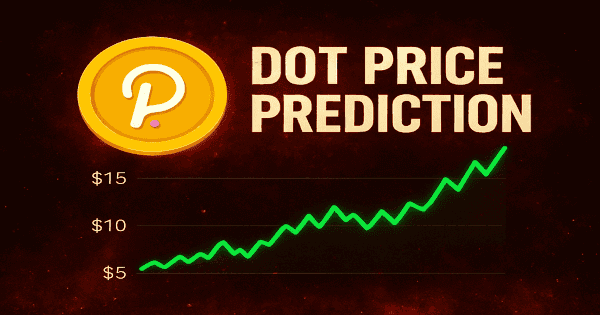
Polkadot is coiling at $1.18 with smart money running 69.8% long, every major moving average flipped to support, and a MACD that's flatlined at zero. A clean daily close above $1.22 opens the door ... (Read More)




