What is the current price of Taiko?
The current price of Taiko is $0.07415 with a 4.14% change in the last 24 hours.
Supply and ATH/ATL data provided by CoinGecko

Hyperliquid perpetuals only. One snapshot every 5 minutes, up to 20 returned price levels per side. Liquidity beyond those levels is unknown. This is not a liquidation heatmap or a fill estimate.
Loading recorded snapshots…
Prices and notionals are USD-equivalent venue units, with USDC collateral. No currency conversion is applied. Notional = venue price × base-asset size. Contract specifications
Derivatives and mapped ecosystem data, with source timings and coverage.
Taiko is an Ethereum layer-2 rollup whose defining choice is that it does not run its own sequencer. Instead of a company-operated node deciding transaction order, Taiko hands ordering to Ethereum's own block proposers. That design is called a based rollup, and Taiko is the largest production example of it. The mainnet is Taiko Alethia, chain ID 167000, verified live, and it is Ethereum-equivalent, meaning it aims to execute the same bytecode with the same semantics rather than an approximation of the EVM.
TAIKO is the network's governance and bonding token. It is not the gas token: transactions on Taiko Alethia are paid in ETH. That distinction trips people up regularly and is worth fixing early.
Official sources:
The slogan is that Ethereum L1 validators sequence Taiko blocks and there is no centralized sequencer. The precise mechanism is narrower and more interesting than that sentence suggests, so it is worth stating carefully.
Taiko blocks are not produced by an appointed sequencer node and then posted. A proposer submits one or more L2 blocks as a proposal to an Inbox contract on Ethereum by calling propose. Because that is an ordinary Ethereum transaction, the final say over whether and in what order proposals land belongs to whoever is building the Ethereum block. Ordering of the L2 is therefore inherited from L1 block building rather than decided by a rollup operator.
Two qualifications matter. First, Taiko's documentation states that the fast proposing path is currently preconfirmation whitelisted, with a permissionless fallback preserved through forced inclusion rules. So the low-latency path today runs through an approved set of preconfirmers, and the open path is the safety valve rather than the common case. Calling the network fully permissionless in day-to-day operation would overstate where it is. Second, preconfirmations, which are live on mainnet, are soft commitments made by preconfirmers who post stake as collateral. They give users fast confirmation before L1 inclusion, and their credibility rests on that collateral rather than on Ethereum finality.
The honest summary is that Taiko has removed the single-operator sequencer and replaced it with an L1-anchored proposal mechanism plus a collateralized preconfirmation layer that is still on a path to full decentralization.
Taiko was built by Taiko Labs, a team that set out to build a type-1, Ethereum-equivalent zero-knowledge rollup rather than one that modifies the EVM for easier proving. The project ran public testnets before launching mainnet, and it publishes its protocol work openly, with the main monorepo and client repositories under active commit activity through September 2026.
The TAIKO token launched alongside mainnet with a total supply of one billion, distributed to a DAO treasury, the core team, a foundation reserve, investors, airdrop recipients, liquidity provisioning, grants and retroactive public goods funding, and prover bond allocations. Vesting and unlocks extend into 2028, so supply entering circulation over time is a structural feature rather than an event.
Proposal A proposer submits a batch of L2 blocks as a proposal to the Inbox contract on Ethereum. This is the point where ordering becomes final relative to L1.
Proving Provers generate validity proofs covering a contiguous range of proposals. A successful proof submission finalizes the proven range directly, rather than waiting out a challenge window as optimistic rollups do.
Multi-proof verification Taiko requires agreement between independent proof systems: a single proof type is never sufficient on its own. Documented valid combinations pair a trusted-execution-environment proof with a zero-knowledge proof, specifically sgxGeth with RISC0, sgxReth with SP1, or RISC0 with SP1, with the requirement that at least one zero-knowledge proof covers every proposal range. A verifier contract orchestrates the sub-verifiers.
Anchoring An Anchor contract on L2 records L1 checkpoints and related metadata into the L2 chain, which is what lets L2 execution reason about L1 state.
The protocol runs on the Unzen release, which implements the Shasta fork architecture based on proposal-derived state and checkpoint-driven finalization. Protocol versions here change meaningfully and reasonably often, so check the current documentation before relying on implementation specifics.
TAIKO does not pay for gas. Users transacting on Taiko Alethia pay in ETH, the same asset they use on Ethereum, which is part of the Ethereum-equivalence goal.
Two things, and they compound.
The first is based sequencing. Nearly every other major rollup runs a sequencer operated by a single company, which is the most centralized part of the stack and the usual target of criticism. Taiko removed that component rather than promising to decentralize it later, which changes the trust profile even while the fast path remains whitelisted.
The second is type-1 Ethereum equivalence combined with mandatory multi-proof verification. Equivalence means contracts and tooling behave as they do on Ethereum without modification. Multi-proof means Taiko does not stake finality on a single proving system being bug-free, which is a meaningful hedge given how young production zero-knowledge proving systems still are.
The trade-off is real: based sequencing and multi-proof verification cost latency and proving expense that a single-sequencer, single-prover design does not pay. The return is a smaller trusted surface.
Taiko's chain security rests on Ethereum for data availability and settlement, on validity proofs for state correctness, on the requirement that independent proof systems agree, and on forced inclusion rules that preserve a permissionless path if the fast path is unavailable.
The token contract is a separate question, and it was read directly in September 2026. TAIKO on Ethereum is deployed at 0x10dea67478c5F8C5E2D90e5E9B26dBe60c54d800, returning the name "Taiko Token", the symbol TAIKO, 18 decimals, and a total supply of exactly 1,000,000,000 tokens. Three findings follow:
The one billion cap is real today, but it is not immutable
The current implementation's function set contains no mint function and no burn function, so nothing can create or destroy TAIKO as the contract stands. However, the token is an upgradeable proxy following the standard proxy storage pattern, with its implementation at 0x5C96fF5B7F61B9E3436Ef04da1377C8388dFc106 and upgrade entry points present in that implementation. The cap is therefore enforced by the absence of a minting path in the deployed logic, not by an immutable contract, and an authorized upgrade could change it. There is also no cap() function.
Upgrade authority sits with a contract, not a bare key
The proxy owner is 0x75Ba76403b13b26AD1beC70D6eE937314eeaCD0a, which holds contract code and is itself a proxy, consistent with Taiko's documented DAO-governed upgrade path rather than with a single wallet. That is a meaningfully better posture than an externally owned account, though it still means governance can change the token.
Transfers can be paused The implementation includes pause and unpause functions. The token was not paused when checked. It also implements vote checkpointing and the permit standard, which is what enables on-chain DAO voting and signature-based approvals.
TAIKO is also deployed on Taiko Alethia at 0xA9d23408b9bA935c230493c40C73824Df71A0975 and on BNB Smart Chain at 0x30C60b20C25b2810cA524810467A0c342294FC61.
Taiko matters because it is the production test of whether a rollup can work without its own sequencer. Sequencer centralization is the most commonly cited weakness of the entire layer-2 model, and most answers to it are promises. Taiko built the alternative and is running it, including the awkward middle stage where the fast path is still gated. Whether based sequencing scales to competitive latency and throughput is one of the genuinely open questions in Ethereum scaling, and Taiko is where the answer is being produced.
TAIKO is listed on centralized exchanges and trades on decentralized exchanges on Ethereum and on Taiko Alethia. Availability and pairs vary by jurisdiction. Confirm which network a venue uses for deposits and withdrawals before transferring.
TAIKO is often available on:
Common pairs are TAIKO against major stablecoins where supported.
Use the official bridge when moving assets between Ethereum and Taiko Alethia, and verify the destination network before every transfer.
You can compare TAIKO with related layer-2 ecosystems on Coinrithm:
Track Taiko live price, chart, market cap, and volume in real time. Practice mock trading and demo trading for Taiko on CoinRithm before using real money.
Use a crypto paper trading account to demo trade Taiko with real-time prices, AI trade feedback, and trading leagues. Test strategies, learn risk management, and build confidence before trading Taiko with real money.
Read the complete paper trading guideThe current price of Taiko is $0.07415 with a 4.14% change in the last 24 hours.
The daily trading volume is $138,608 representing a 9.17% change in the past 24 hours.
The market capitalization of Taiko is $16,239,742, ranking #580 globally.
The fully diluted valuation (FDV) of Taiko is $74,145,308, calculated assuming the maximum supply of 1,000,000,000 TAIKO is in circulation.
Circulating: 219,025,889. Total: 1,000,000,000. Max: 1,000,000,000.
In the last 24 hours, Taiko traded between a low of $0.07030 and a high of $0.07505.






 TAIKO/USDTTether USDT0.07415 USDT

Upbit lifts TAIKO’s trading warning after reviewing June’s bridge exploit, restoring deposits across its KRW, BTC and USDT markets in Korea.

The protocol completed a multi-stage recovery that included an independent security review. The TAIKO token has surged as much as 136% in recent trading.

Taiko restored bridge transfers after replenishing asset backing and completing security fixes following an 11-day network disruption.

Taiko says its June 21 attack path is closed and plans a four-step restart after a bridge exploit raised safety concerns for users.

After an attacker exploited Taiko’s bridge, the Ethereum layer-2 halted block production and urged users to withdraw, with losses estimated near $1.7 million. (Read More)
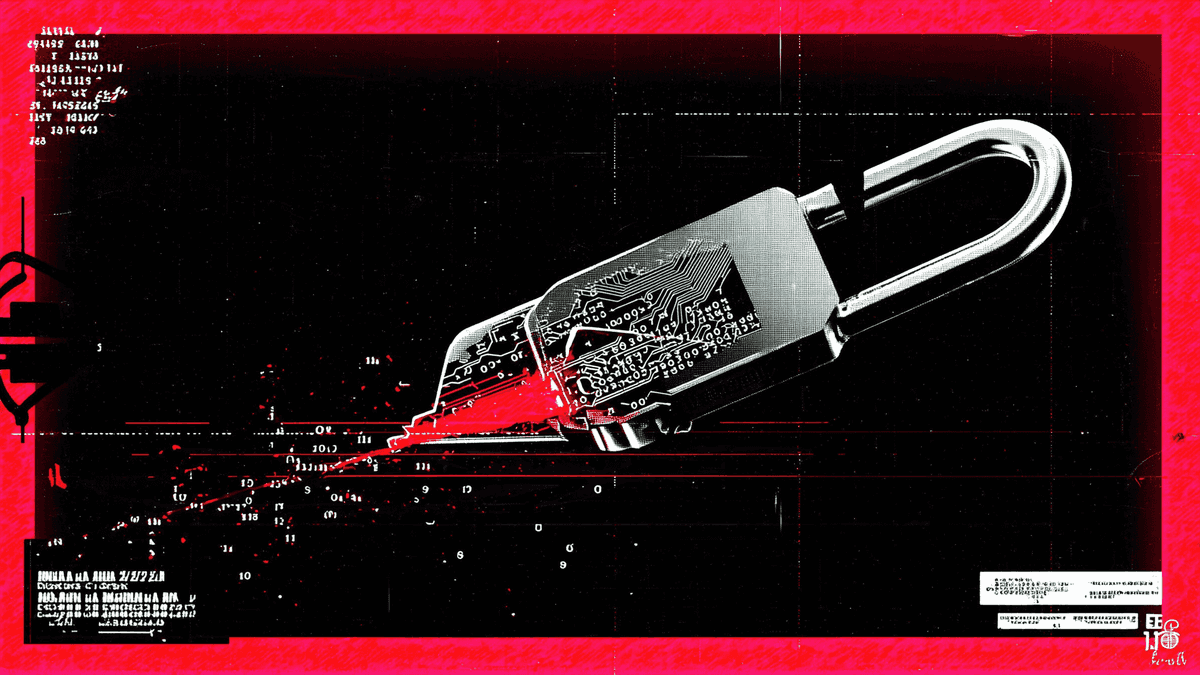
An attacker forged withdrawal proofs using an RSA-3072 private key accidentally committed to Taiko’s public raiko GitHub repository, draining $1.7 million from L1 bridge contracts and forcing the protocol to halt block production and urge all users to exit.