What is the current price of SATS (Ordinals)?
The current price of SATS (Ordinals) is $0.00000001072 with a 3.43% change in the last 24 hours.
Supply and ATH/ATL data provided by CoinGecko

Hyperliquid perpetuals only. One snapshot every 5 minutes, up to 20 returned price levels per side. Liquidity beyond those levels is unknown. This is not a liquidation heatmap or a fill estimate.
Loading recorded snapshots…
Prices and notionals are USD-equivalent venue units, with USDC collateral. No currency conversion is applied. Notional = venue price × base-asset size. Contract specifications
Derivatives and mapped ecosystem data, with source timings and coverage.
SATS is a BRC-20 fungible token inscribed on Bitcoin using the Ordinals protocol. It is not an ERC-20 token, it does not live on Ethereum, and, despite the name, it is not the satoshi denomination unit. A satoshi is the smallest divisible unit of bitcoin, one hundred millionth of a BTC, and it is part of Bitcoin's consensus rules. SATS the token is a separate asset whose ticker was chosen as a nod to that unit, and confusing the two is the single most common error made about this asset.
The distinction matters because it changes what you actually own. Holding bitcoin means holding a balance the Bitcoin network itself enforces. Holding SATS means holding a balance that off-chain indexers compute by reading text that was written into Bitcoin transactions. Bitcoin stores the data faithfully, but Bitcoin's consensus rules never validate it.
Reference sources:
SATS has no company, foundation, development team, treasury, or roadmap. It was deployed anonymously and has been sustained by community interest and exchange listings rather than by an organization.
The context around it is better documented than the token itself. Casey Rodarmor released the Ordinals protocol in January 2023, assigning a serial number to every satoshi and allowing arbitrary data to be inscribed onto individual satoshis, a capability made practical by Bitcoin's Taproot upgrade in November 2021. Shortly afterward, a pseudonymous developer known as Domo published BRC-20 as an experimental token standard built on top of inscriptions. SATS was one of the earliest and by far the most widely distributed BRC-20 tokens.
The deploy inscription was confirmed in Bitcoin block 779,971 on March 9, 2023. Reading its content directly from an ordinals indexer returns exactly this JSON:
{"p":"brc-20","op":"deploy","tick":"sats","max":"2100000000000000","lim":"100000000"}
That is the whole token definition. A maximum of 2,100,000,000,000,000 units, with a per-mint limit of 100,000,000, which allows exactly 21,000,000 separate mints. The numbers deliberately echo Bitcoin: 21 million mints, 100 million units each, the same shape as 21 million BTC of 100 million satoshis. Minting was open to anyone willing to pay the transaction fees and ran to completion in September 2023.
This is the part worth understanding properly, because the mechanics explain most of the risks.
Everything is a text inscription A BRC-20 operation is a small JSON object written into the witness data of a Taproot transaction. There are three operations: deploy, which defines a ticker, its maximum, and its per-mint limit; mint, which claims an allocation; and transfer, which moves a balance.
Bitcoin does not enforce any of it Miners and full nodes do not parse these inscriptions. From the perspective of Bitcoin consensus, the satoshis carrying them are ordinary satoshis. There is no smart contract, no virtual machine, and no on-chain balance check. An invalid mint, such as one exceeding the maximum, is still a perfectly valid Bitcoin transaction.
Balances are computed by indexers Wallets, marketplaces, and exchanges each run or query an indexer that replays every inscription in block order and applies the BRC-20 rules to derive who owns what. The state you see is that indexer's opinion. Correctness comes from independent operators applying the same rules to the same data and agreeing, not from a consensus mechanism.
Transfers take two steps The holder first inscribes a transfer inscription, which moves the amount from an available balance into a transferable one, then sends that specific inscription to the recipient. Skipping the second step, or spending the carrying satoshi as ordinary change, is a well-known way to lose tokens permanently.
SATS has no protocol utility. It is not gas, it is not collateral inside a Bitcoin-native lending system, it confers no governance rights, and it earns nothing. There is no staking mechanism and no fee accrual.
What it does have is distribution and recognition. SATS was minted by a very large number of participants, its ticker is instantly legible to a Bitcoin audience, and it has been listed on many centralized exchanges. In practice it functions as a culturally anchored Bitcoin-native memecoin and as a liquid proxy for BRC-20 activity generally.
Its scale and its symbolism. The issuance structure directly imitates Bitcoin's own arithmetic, which gave it an unusually clean story for a fully community-minted asset. It was also one of the tokens that proved BRC-20 could distribute widely without a team, a raise, or an allocation, at the cost of leaving no one responsible for it afterward.
The gap is structural rather than cosmetic.
The data is as durable as Bitcoin. Once an inscription is confirmed and buried under proof of work, the record of it cannot practically be altered, and SATS inherits that permanence.
The interpretation of that data is not secured by Bitcoin. It relies on indexer operators implementing the same rules, handling reorganizations identically, and staying online. If two widely used indexers disagreed about an edge case, holders could see different balances depending on which service their wallet or exchange trusted, and Bitcoin would offer no way to settle the dispute.
SATS matters mainly as evidence. It showed that Bitcoin block space could carry a token economy Bitcoin itself neither validates nor endorses, and that such a token could reach enormous distribution with no organization behind it. That experiment reshaped how the Bitcoin ecosystem thinks about on-chain data and forced a serious argument about fee markets and what Bitcoin should be used for. Understanding SATS is a fast route to understanding both the appeal and the fragility of Bitcoin-native tokens.
SATS is listed on a number of centralized exchanges and on BRC-20 marketplaces such as UniSat, where inscriptions trade directly. Availability, trading pairs, and whether on-chain withdrawal is supported vary by venue and jurisdiction, and that last point is worth checking before you buy if you intend to self-custody.
SATS is often available on:
Common pairs include SATS/USDT where supported.
After purchase, SATS can be stored:
Do not send BRC-20 tokens to a standard Bitcoin address managed by a wallet that has no inscription support. Such wallets can spend the carrying satoshi as ordinary change, which destroys the balance with no way to recover it.
You can compare SATS with related Bitcoin ecosystem assets on Coinrithm:
Track SATS (Ordinals) live price, chart, market cap, and volume in real time. Practice mock trading and demo trading for SATS (Ordinals) on CoinRithm before using real money.
Use a crypto paper trading account to demo trade SATS (Ordinals) with real-time prices, AI trade feedback, and trading leagues. Test strategies, learn risk management, and build confidence before trading SATS (Ordinals) with real money.
Read the complete paper trading guideThe current price of SATS (Ordinals) is $0.00000001072 with a 3.43% change in the last 24 hours.
The daily trading volume is $136,683 representing a 9.92% change in the past 24 hours.
The market capitalization of SATS (Ordinals) is $22,504,755, ranking #505 globally.
The fully diluted valuation (FDV) of SATS (Ordinals) is $22,504,755, calculated assuming the maximum supply of 2,100,000,000,000,000 SATS is in circulation.
Circulating: 2,100,000,000,000,000. Total: 2,100,000,000,000,000. Max: 2,100,000,000,000,000.
In the last 24 hours, SATS (Ordinals) traded between a low of $0.00000001023 and a high of $0.00000001077.



 SATS/USDTTether USDT0.00000001072 USDT

The Bitcoin treasury company could acquire an estimated 7,372 BTC with its net proceeds, potentially surpassing Metaplanet’s holdings if it allocates the full amount.

Strive has closed an upsized $630 million preferred stock offering, introducing a new fixed dividend security as the Bitcoin treasury company expands its financing options beyond its existing SATA shares. According to the company’s October 20 announcement, Strive sold 7…
Strive purchases 1,223 Bitcoin for nearly $100 million, lifting holdings to 36,818 BTC as the company prepares to settle its $630 million SATS offering.

The $100 dividend base implies a 16.7% simple annual yield at the offer price, above SATA's initial 15%.

SATS will offer a fixed 15% dividend yield at par and be junior to the company's existing SATA, which pays a variable rate (currently 13%).
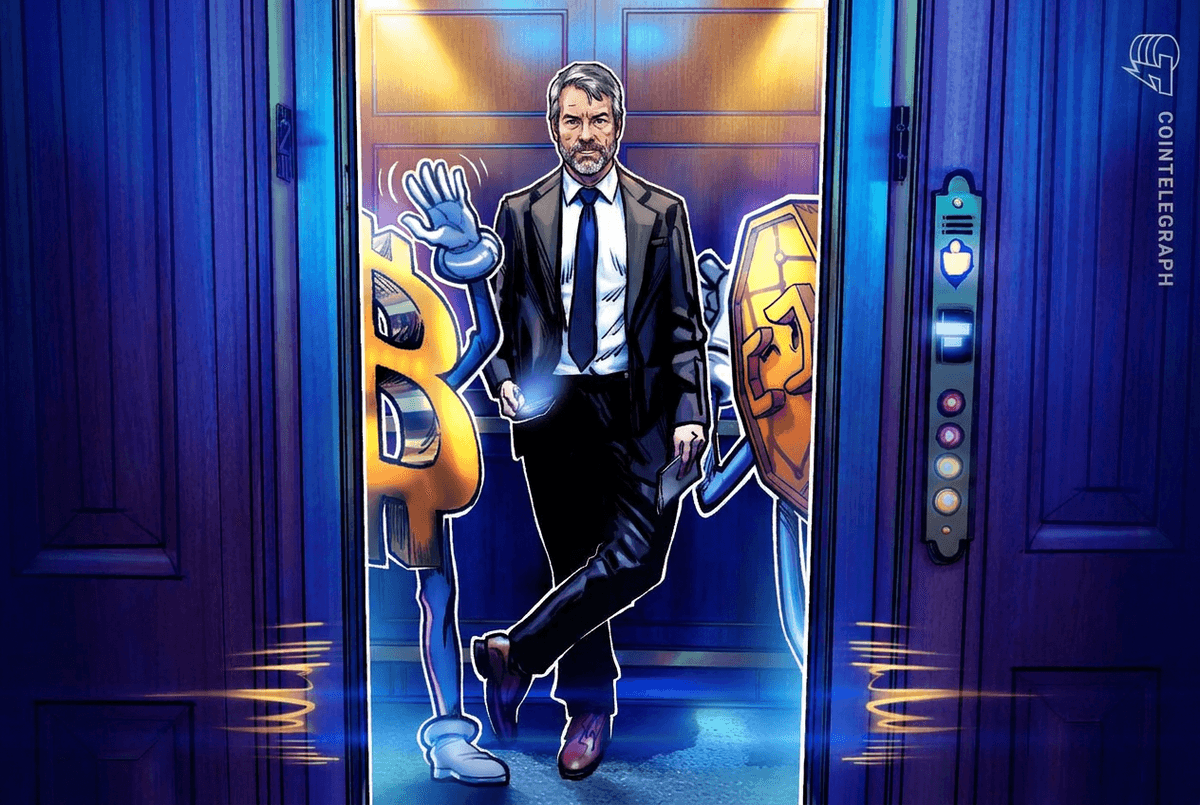
CryptoQuant urged Strategy to pause Bitcoin buying as dividend coverage shrank. Meanwhile, CBOE eyes crypto perpetual futures and Chainlink joins a stablecoin FX project.