No: 78%24h Vol: $50.12mo
Polymarket

Hyperliquid perpetuals only. One snapshot every 5 minutes, up to 20 returned price levels per side. Liquidity beyond those levels is unknown. This is not a liquidation heatmap or a fill estimate.
Loading recorded snapshots…
Prices and notionals are USD-equivalent venue units, with USDC collateral. No currency conversion is applied. Notional = venue price × base-asset size. Contract specifications
Active prediction markets related to Monero

Derivatives and mapped ecosystem data, with source timings and coverage.
Monero (XMR) is a proof-of-work cryptocurrency built to be private digital cash: every transaction hides the sender, the receiver and the amount by default. It launched in April 2014 and is the best-known coin where privacy is mandatory rather than an optional mode. Monero matters because it treats privacy and fungibility as the same problem: if no coin's history can be traced, no coin can be singled out or refused because of where it has been.
XMR is used to:
Official resources:
Monero began in April 2014 as a fair, pre-announced launch of the CryptoNote reference code, with no premine or instamine, and no part of the block reward goes to developers. The project was started by a pseudonymous founder, thankful_for_today, whose proposed changes the community rejected. A group that became the Monero Core Team forked the project, and the community followed the new team.
Development is open-source and globally distributed. Work is funded by donations, including through the Community Crowdfunding System, where contributors propose tasks and the community funds them.
Major network upgrades, per the official roadmap and release notes:
RingCT (January 2017) Ring Confidential Transactions made transaction amounts hidden.
Bulletproofs (October 2018) Smaller range proofs cut transaction sizes substantially.
RandomX (November 2019) A new CPU-friendly, ASIC-resistant proof-of-work algorithm developed by Monero community members.
CLSAG (October 2020) A more compact ring signature scheme that shrank transactions and sped up verification.
Tail emission (end of May 2022) The main emission curve finished at about 18.132 million XMR, and the permanent tail emission began.
Fluorine Fermi upgrade (August 13, 2022) Added Bulletproofs+, view tags (the roadmap credits them with about 40% faster wallet sync) and a fixed ring size of 16.
The 0.18 "Fluorine Fermi" software line is still current; version 0.18.5.0 (May 2026) added SOCKS v5 support and removed UPnP. Full-Chain Membership Proofs (FCMP++), which would replace ring signatures with a proof over the whole set of outputs, remain on the roadmap as "coming soon", along with Seraphis and the Jamtis address format.
Monero combines several privacy technologies in every transaction:
Ring signatures (sender privacy) The real input is signed together with decoy outputs from the blockchain. Since August 2022 every ring has 16 members, so an observer cannot tell which one was spent. Key images prevent the same output from being spent twice.
Stealth addresses (receiver privacy) Each payment goes to a one-time address derived from the recipient's public address, so the recipient's address never appears on the chain.
RingCT (amount privacy) Amounts are hidden with commitments, and Bulletproofs+ range proofs let the network confirm that no coins were created from nothing without revealing values.
Network privacy Nodes use Dandelion++ to obscure where a transaction first entered the network, and wallets can connect over Tor or I2P.
Blocks are produced roughly every 2 minutes, and block size adjusts dynamically with demand rather than using a fixed limit.
XMR is the only asset on the Monero chain. It is used for private payments, as transaction fees, and as the block reward that pays miners.
Supply rules: the main emission produced about 18.132 million XMR by the end of May 2022. Since then, tail emission pays a fixed 0.6 XMR per block (slightly less if a block-size penalty applies), forever. That means Monero has no hard cap, but its inflation rate is below 1% a year and keeps falling as supply grows. The tail emission is designed so miners always have an incentive to secure the chain, even if fees stay low.
Compared with Bitcoin, whose ledger is fully transparent, Monero encrypts the key details of every transaction. Compared with Zcash, which uses zero-knowledge proofs but lets users choose between transparent and shielded addresses, Monero makes privacy the only option. Compared with Dash, whose optional CoinJoin mixing is layered on a transparent chain, Monero's privacy is built into the protocol itself.
Monero is secured by proof of work using RandomX, which is optimized for general-purpose CPUs to reduce the advantage of ASICs and spread hash power across many independent miners. Anyone can run a full node to verify every block, and the cryptographic proofs let nodes confirm that each transaction is valid and unspent without learning who sent it or how much. The project runs a public Vulnerability Response process for reporting security bugs.
Monero is the longest-running test of whether private-by-default digital cash can work at scale. It shows that strong on-chain privacy is compatible with public verifiability, and it keeps pushing privacy research forward through RingCT, Bulletproofs, CLSAG and, next, FCMP++.
Because of its privacy features, XMR availability varies widely by jurisdiction and exchange. Options include centralized exchanges that still list it, peer-to-peer marketplaces and atomic swaps between BTC and XMR.
XMR spot pairs are listed on:
Non-custodial routes include Bisq, a peer-to-peer exchange.
Because Monero hides amounts and addresses, block explorers such as xmrchain.net show blocks and transactions but not balances or who paid whom.
Track Monero live price, chart, market cap, and volume in real time. Practice mock trading and demo trading for Monero on CoinRithm before using real money.
Use a crypto paper trading account to demo trade Monero with real-time prices, AI trade feedback, and trading leagues. Test strategies, learn risk management, and build confidence before trading Monero with real money.
Read the complete paper trading guideThe current price of Monero is $533.85 with a 0.64% change in the last 24 hours.
The daily trading volume is $41,798,785 representing a 21.77% change in the past 24 hours.
The market capitalization of Monero is $10,045,427,255, ranking #13 globally.
The fully diluted valuation (FDV) of Monero is $10,045,427,255, calculated using circulating supply because the maximum supply is unlimited.
Circulating: 18,816,997. Total: 18,817,015. Max: ∞.
In the last 24 hours, Monero traded between a low of $517.27 and a high of $544.76.







 XMR/USDTTether USDT533.85 USDT
Bitcoin Magazine Here’s How Not To Screw up Your Bitcoin Privacy Speaking on the Bitcoin Rails podcast, Cake Wallet’s Seth for Privacy said people need to take more precautions to protect their identities when using the biggest cryptocurrency. This post Here’s How Not To Screw up Your Bitcoin Privacy first appeared on Bitcoin Magazine and is written by Mathew Di Salvo.

Bitcoin and Ethereum barely moved today, but Zcash and Monero are leading the largest coins over the last 24 hours.

Best crypto to buy today: Pepeto's $11M+ presale offers live tools, 43,000+ holders and projected 200x potential alongside BCH, HYPE and XMR.

Crypto majors climbed alongside equity futures on Monday, with Monero's XMR up 13%, as Brent fell for a fourth straight session and traders positioned ahead of a Trump-Xi summit later this week.

The hacker group iamnotavillain demanded $3 million in Monero from Revolut and threatened to sell stolen customer data unless paid within 24 hours.
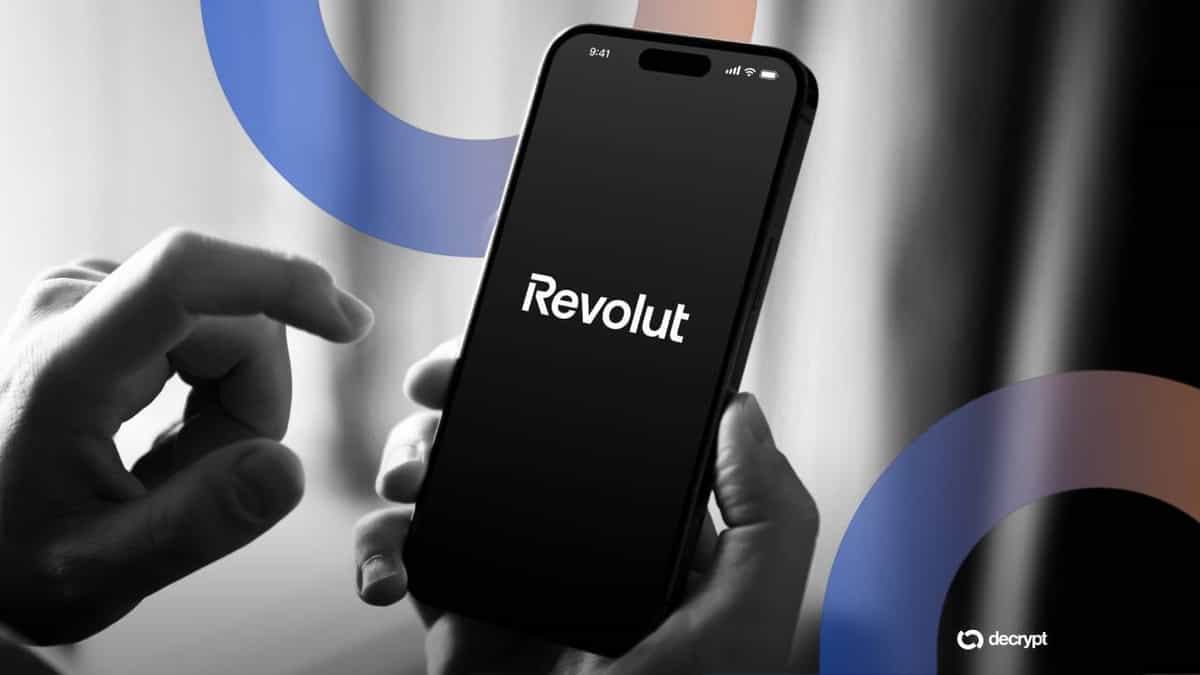
The group says it chose whom to target by scanning the blockchain for Revolut accounts holding significant crypto.