Above $2,170.00: 75%24h Vol: $10.5K4d

Supply and ATH/ATL data provided by CoinGecko

Hyperliquid perpetuals only. One snapshot every 5 minutes, up to 20 returned price levels per side. Liquidity beyond those levels is unknown. This is not a liquidation heatmap or a fill estimate.
Loading recorded snapshots…
Prices and notionals are USD-equivalent venue units, with USDC collateral. No currency conversion is applied. Notional = venue price × base-asset size. Contract specifications
Active prediction markets related to Zcash
Above $2,170.00: 75%24h Vol: $10.5K4d
 ↑ 2000: 24%24h Vol: $26.52mo

 $1,000 or above: 57%24h Vol: $0.52mo
Derivatives and mapped ecosystem data, with source timings and coverage.
Zcash is a proof-of-work cryptocurrency that lets users send money with the sender, receiver and amount encrypted, while the network still verifies every transaction. It does this with zero-knowledge proofs, and it was the first cryptocurrency to use them for private peer-to-peer payments. Zcash matters because most blockchains are fully public ledgers; Zcash gives users a Bitcoin-like asset with a fixed 21 million supply plus optional, cryptographically enforced privacy.
Official resources include the Zcash website, the Zcash protocol specification, the Zcash Improvement Proposals (ZIPs) and the source code on GitHub.
Zcash grew out of academic research. In 2013 Johns Hopkins professor Matthew Green and graduate students Ian Miers and Christina Garman designed Zerocoin, a privacy extension for Bitcoin. Researchers including Alessandro Chiesa and Madars Virza (MIT), Eli Ben-Sasson (Technion) and Eran Tromer (Tel Aviv University) contributed the zk-SNARK work that became the Zerocash protocol. Zooko Wilcox led the company that built Zcash, and the network was first mined on 28 October 2016.
Key milestones:
Proof of work Miners secure the chain with the Equihash algorithm and produce a block about every 75 seconds.
Transparent and shielded pools Transparent addresses work like Bitcoin, with public amounts and addresses. Shielded pools (Sprout, now deprecated; Sapling; Orchard; and, since 2026, Ironwood) encrypt sender, receiver, amount and memo.
Zero-knowledge proofs Each shielded transaction carries a proof that inputs equal outputs and that the spender owns the notes, without revealing them. Since NU5, Orchard proofs use Halo 2, which removed the trusted-setup assumption of earlier pools.
Unified Addresses and viewing keys A single Unified Address can receive to several pools, so wallets pick the most private route automatically. Viewing keys give an auditor or accountant read-only access to a wallet's history without the ability to spend.
Turnstiles Value moving between pools is tracked in the clear at pool boundaries, so a counterfeiting bug inside one pool cannot inflate total supply undetected.
ZEC is used to pay transaction fees, as a private medium of exchange and store of value, and as the block reward that pays miners. Since NU6.1, ZEC holders also have a formal voice: the 12% coinholder share of block rewards is allocated by coinholder decisions.
Supply rules mirror Bitcoin: a maximum of 21 million ZEC, with block rewards halving roughly every four years. The first halving came with Canopy and the second in November 2024; the next is scheduled for 23 November 2028 under current rules. After NU6, block rewards are split 80% to miners, 8% to Zcash Community Grants and 12% to the Coinholder-Controlled Fund (seeded by the NU6 lockbox, which had been accruing that share since 2024), an arrangement set to run until the third halving.
Monero makes privacy mandatory for every transaction using ring signatures and stealth addresses, while Zcash makes shielding optional and hides transaction data completely inside its shielded pools using zero-knowledge proofs. Dash relies on CoinJoin mixing, which is weaker than encryption. Compared with Bitcoin, Zcash shares the 21 million cap and proof of work but adds shielded transactions and faster 75-second blocks.
Consensus security comes from Equihash proof-of-work mining. Privacy security depends on the correctness of the proof circuits, which is why Zcash invests in audits: the NU5 design was reviewed by NCC Group, QEDIT and cryptographer Mary Maller. The 2026 Orchard bug showed both the risk and the response: a critical flaw was found by an audit, fixed through an emergency upgrade within about five days, and followed by the Ironwood turnstile so supply can be checked independently.
Zcash is the longest-running live deployment of zero-knowledge proofs in money, and its research produced widely used ZK tooling such as the Halo 2 proving system. It remains the main option for holders who want Bitcoin-like scarcity with encrypted transactions.
ZEC trades on several major centralized exchanges, though some jurisdictions restrict privacy coins. Many exchanges support only transparent deposits and withdrawals, so check whether your platform can send to shielded addresses.
ZEC spot markets are live on:
Verify network upgrade status on the official Zcash upgrade page.
Track Zcash live price, chart, market cap, and volume in real time. Practice mock trading and demo trading for Zcash on CoinRithm before using real money.
Use a crypto paper trading account to demo trade Zcash with real-time prices, AI trade feedback, and trading leagues. Test strategies, learn risk management, and build confidence before trading Zcash with real money.
Read the complete paper trading guideThe current price of Zcash is $1,305.52 with a 4.78% change in the last 24 hours.
The daily trading volume is $350,535,208 representing a 15.32% change in the past 24 hours.
The market capitalization of Zcash is $22,203,627,849, ranking #9 globally.
The fully diluted valuation (FDV) of Zcash is $27,415,822,156, calculated assuming the maximum supply of 21,000,000 ZEC is in circulation.
Circulating: 17,007,558. Total: 17,009,270. Max: 21,000,000.
In the last 24 hours, Zcash traded between a low of $1,212.15 and a high of $1,316.37.







 ZEC/USDTTether USDT1,305.52 USDT

Zcash co-founder Sean Bowe proposed ending automatic grants funding, citing a treasury valuation of more than $125 million.
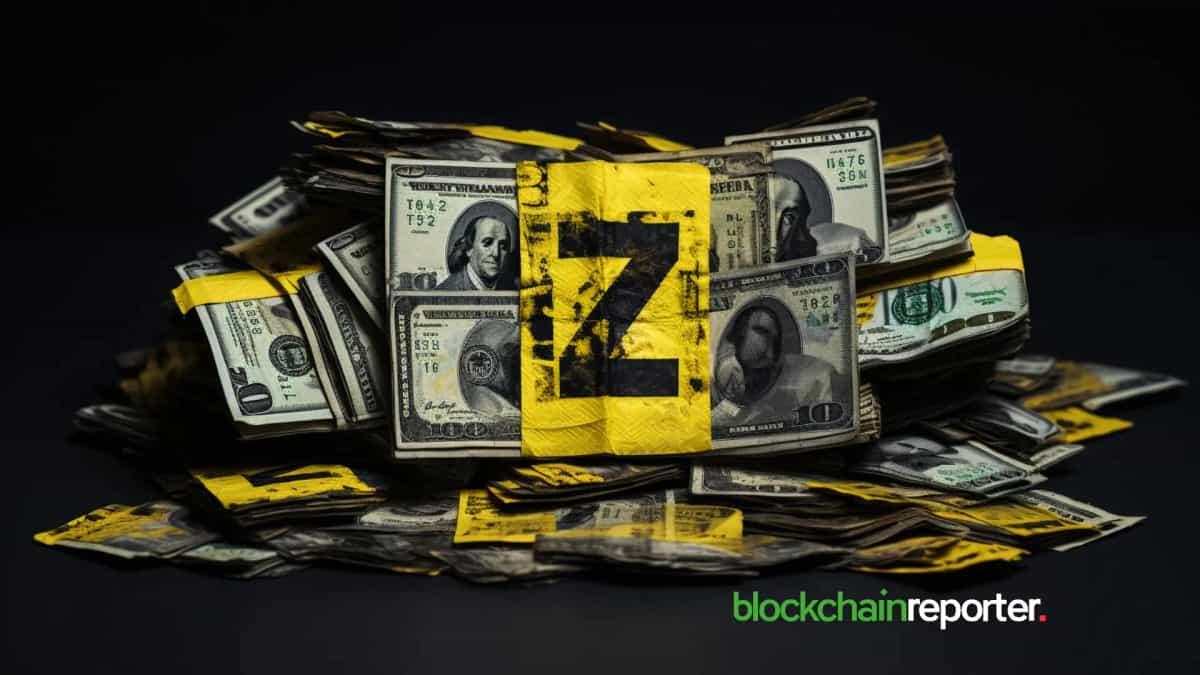
Zcash co-founder Sean Bowe argues the grants program no longer needs its automatic 8% block subsidy after amassing a $125 million treasury in reserve.

Sean Bowe says ZCG has enough money to keep funding projects and wants its share of new ZEC redirected to a reserve for the network.
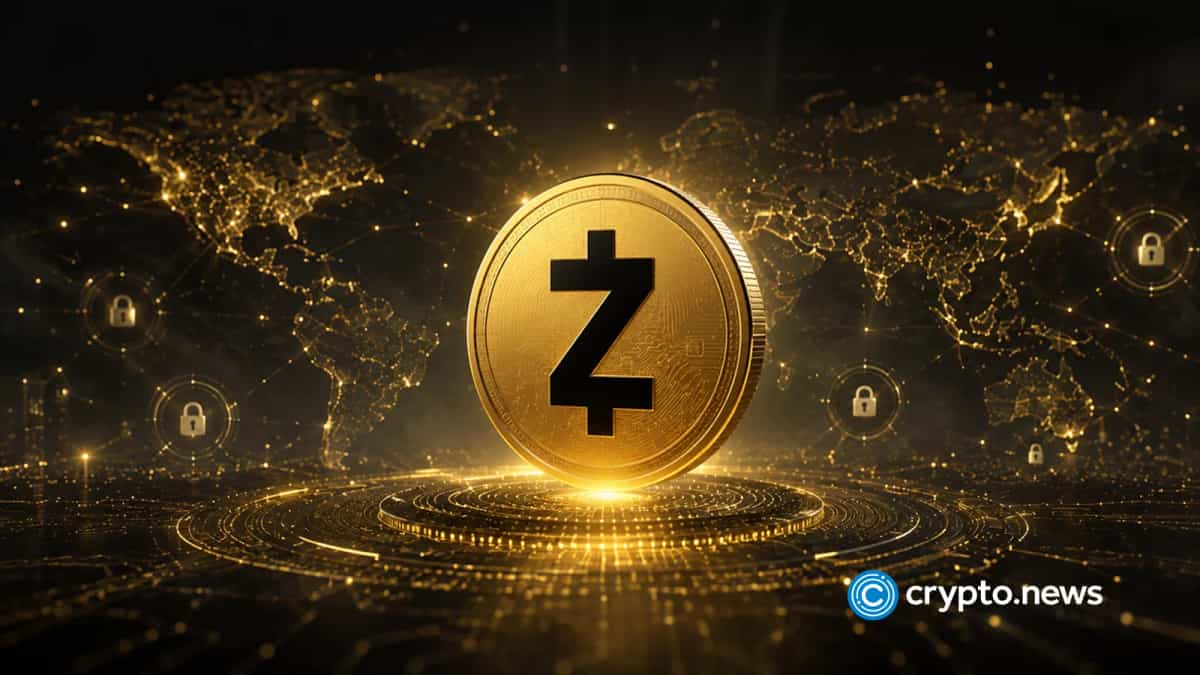
Zcash co-founder Sean Bowe has proposed redirecting 8% of the network’s block subsidies from Zcash Community Grants to a reserve designed to support future mining rewards, potentially ending the grant program’s regular funding. In a proposal published on the Zcash…

Sean Bowe’s proposal would send the committee’s 8% share of newly created ZEC to a reserve for future miners. The committee would keep the money it has already received.
Grayscale says Zcash's 20% developer fund supported a decade of privacy upgrades, including Ironwood's formal verification and quantum recovery features.