What is the current price of Qubic?
The current price of Qubic is $0.0000004769 with a 3.43% change in the last 24 hours.
Supply and ATH/ATL data provided by CoinGecko

Hyperliquid perpetuals only. One snapshot every 5 minutes, up to 20 returned price levels per side. Liquidity beyond those levels is unknown. This is not a liquidation heatmap or a fill estimate.
Loading recorded snapshots…
Prices and notionals are USD-equivalent venue units, with USDC collateral. No currency conversion is applied. Notional = venue price × base-asset size. Contract specifications
Derivatives and mapped ecosystem data, with source timings and coverage.
Qubic is a feeless layer 1 network run by a fixed set of 676 validating nodes called Computors, which agree on state through a quorum vote rather than a longest chain rule. Instead of spending mining work on arbitrary hashes, Qubic points miner compute at training artificial neural networks, a design it calls Useful Proof of Work. The native unit, documented as a Qubic Unit and traded as QUBIC, works less like a fee token and more like consumable network energy.
Official resources:
The Qubic website credits the project to Sergey Ivancheglo, known online as Come-from-Beyond, who previously created NXT and co-founded IOTA. Beyond the founder, the documentation does not identify contributors by name, and it gives no launch date. The tokenomics page does place the first emission halving at epoch 175 in August 2025, and epochs run seven days.
The ledger advances in units called ticks. Computors take turns as tick leader, and a tick is accepted once quorum is reached. The documented threshold is 451 Computors, two thirds of the 676 seats, and the same threshold governs protocol polls.
Seats are not permanent. Computors are ranked weekly on solutions delivered by the miners pointed at them. The top 451 keep their seats while the remaining 225 slots are refilled each epoch, which ties mining output directly to governance power. Transactions carry no fee, and Qubic's write ups describe the network using KangarooTwelve hashing and FourQ signatures.
QUBIC is treated as computational energy. The tokenomics page states that QUBIC spent on smart contract execution commissions is burned rather than paid to Computors, and that deploying a contract requires a Dutch auction in which all QUBIC spent is burned. Each epoch mints new QUBIC split between Computors, the Computor Controlled Fund, QEarn and burns, on a schedule with periodic halvings. Supply is capped at 200 trillion after a community vote reduced the original cap.
Mining work is not thrown away. Qubic reuses the mining competition as the scoring function deciding which nodes hold governance seats, and routes the compute into neural network training. Two further choices stand out: a fixed 676 seat validator set reranked weekly, and a deployment model that burns tokens through an auction instead of paying validators.
Akash Network and Render run marketplaces where a buyer pays a supplier for a job. Qubic's compute is directed by the protocol at its own research program instead. Bittensor also rewards machine learning work, but Qubic ties that work to validator selection on a smart contract chain. Against a proof of work chain such as Kaspa, the work differs in kind and Qubic charges no fee.
Because 451 of 676 Computors must agree, a minority of faulty or hostile seats cannot finalize a tick, and weekly reranking pushes offline seats out. The active Computor list is broadcast by an arbitrator role so nodes can verify which seat signed a tick.
The arbitrator role is a coordination point with no equivalent in a fully permissionless design, and anyone assessing decentralization should examine it. Throughput and finality figures published by the project are self reported.
The mining model also has an external footprint. During 2025 Qubic pointed mining capacity at Monero and publicly claimed a majority share of that network's hashrate, drawing heavy backlash and debate over whether the demonstration crossed into attack behavior. Aigarth's stated ambition of artificial general intelligence is a research goal, not a product.
Qubic answers the standing criticism of proof of work directly rather than by switching to stake. If mining energy can produce output beyond a hash, the security budget stops being pure waste, and Qubic is a live test of that idea.
QUBIC is listed on a number of centralized exchanges, where most spot liquidity sits. Because Qubic is its own layer 1 rather than a token on another chain, confirm a venue supports withdrawal to a native Qubic address before buying.
Qubic publishes open source wallets across the main platforms: a web wallet, a Chromium browser extension, and iOS and Android apps. A Qubic Ledger application exists for hardware custody, and a MetaMask Snap is available.
Track Qubic live price, chart, market cap, and volume in real time. Practice mock trading and demo trading for Qubic on CoinRithm before using real money.
Use a crypto paper trading account to demo trade Qubic with real-time prices, AI trade feedback, and trading leagues. Test strategies, learn risk management, and build confidence before trading Qubic with real money.
Read the complete paper trading guideThe current price of Qubic is $0.0000004769 with a 3.43% change in the last 24 hours.
The daily trading volume is $371,548 representing a 62.65% change in the past 24 hours.
The market capitalization of Qubic is $68,523,168, ranking #259 globally.
The fully diluted valuation (FDV) of Qubic is $95,371,745, calculated assuming the maximum supply of 200,000,000,000,000 QUBIC is in circulation.
Circulating: 143,697,000,709,241. Total: 178,248,158,971,270. Max: 200,000,000,000,000.
In the last 24 hours, Qubic traded between a low of $0.0000004385 and a high of $0.0000004807.







 QUBIC/USDTTether USDT0.0000004769 USDT
The 4.26.4 patch separates new account seeds from the exposed random stream but leaves header generation unchanged.

Qubic has halted its layer-1 blockchain after an attacker exploited a wallet security flaw to steal approximately 2.94 trillion QU tokens worth $1.4 million from more than 1,400 accounts. According to an Oct. 18 statement from the Qubic core team,…
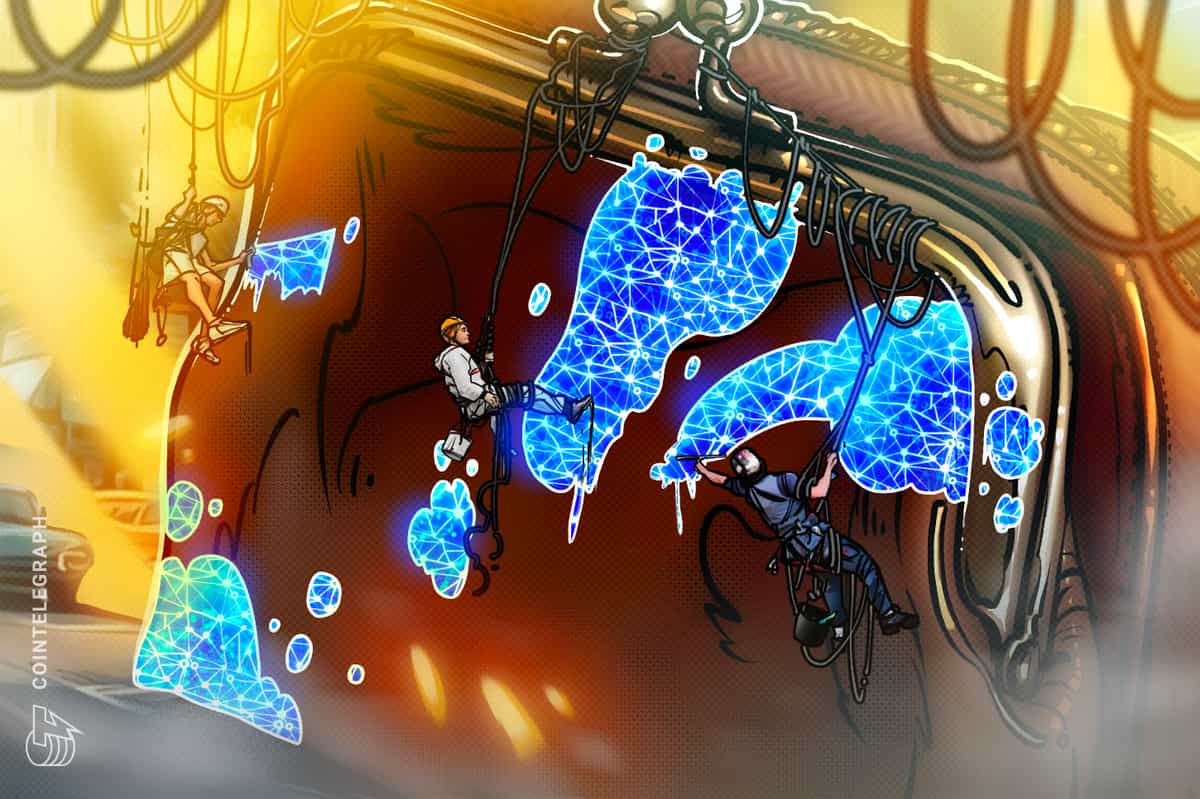
Qubic says 87.1% of the stolen funds remain onchain and the rest were frozen at crypto exchange MEXC, as network validators prepare to vote on a recovery plan.

Qubic says 87.1% of the drained QU remains immobilized on its network, while MEXC froze the account receiving the rest.
The integration of $QUBIC into Alchemy Pay’s on-ramp reflects the rising demand for fiat-to-crypto payments amid traction of AI-driven blockchain ecosystems.
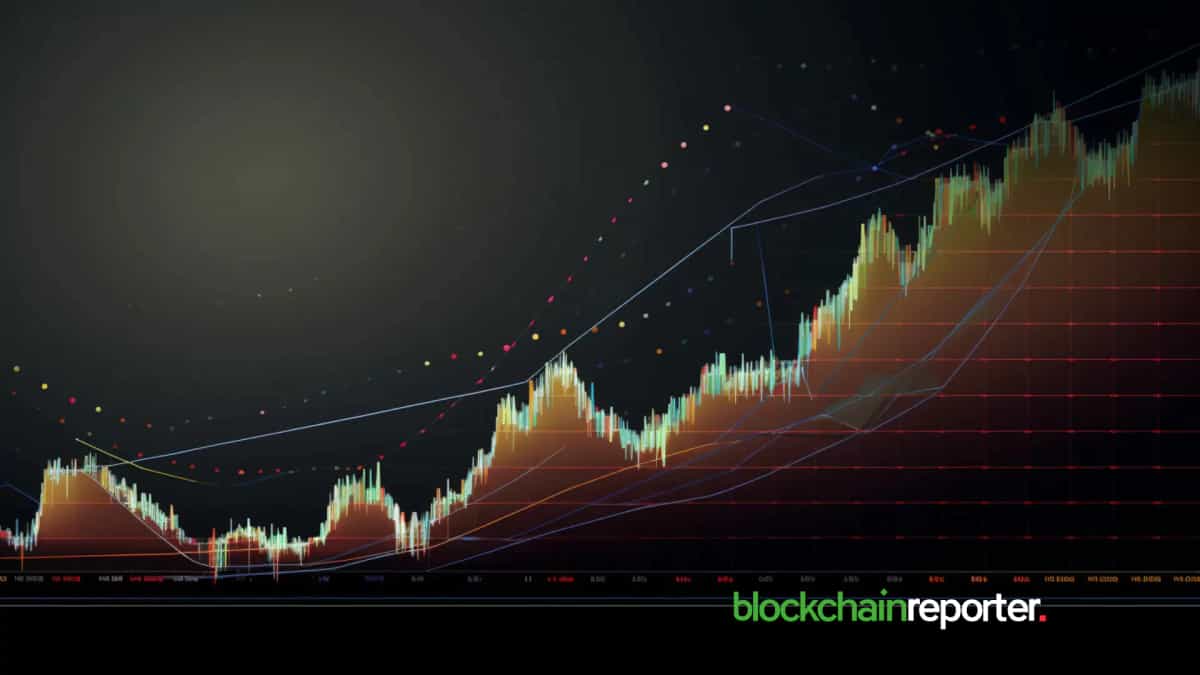
Qubic has been on a remarkable rise recently, with on-chain indicators showing it has entered a critical technical setup that triggers further price increases.