What is the current price of Bittensor?
The current price of Bittensor is $276.54 with a 3.34% change in the last 24 hours.

Hyperliquid perpetuals only. One snapshot every 5 minutes, up to 20 returned price levels per side. Liquidity beyond those levels is unknown. This is not a liquidation heatmap or a fill estimate.
Loading recorded snapshots…
Prices and notionals are USD-equivalent venue units, with USDC collateral. No currency conversion is applied. Notional = venue price × base-asset size. Contract specifications
Derivatives and mapped ecosystem data, with source timings and coverage.
Bittensor is an open-source protocol that combines blockchain incentives with a decentralized machine learning network. It is designed to let AI systems contribute useful outputs and be rewarded based on the value they provide to the network.
Official resources:
Bittensor is commonly associated with founders Jacob Steeves and Ala Shaabana, with early technical direction also tied to Yuma Rao and the original whitepaper.
The network has evolved through open-source development, validator participation, and subnet expansion for different AI-oriented workloads.
Bittensor is usually explained with three core mechanisms:
Participants contribute model outputs to subnets, where value is continuously evaluated by network participants.
Validators score contributions, and miners or model providers compete to deliver higher-value responses.
Rewards and stake influence are aligned around contribution quality, with protocol economics designed to favor useful signal over low-value behavior.
Important Bittensor ecosystem components include:
TAO is commonly used for:
Bittensor is often differentiated by:
Compared with general Layer 1 networks, Bittensor is typically positioned around:
Common use cases include:
Bittensor security depends on:
Key considerations include:
Bittensor represents an alternative model for AI infrastructure: an open, incentive-driven network where machine intelligence can be produced, evaluated, and monetized without a single centralized platform.
TAO is listed on major centralized exchanges. Availability and pairs vary by jurisdiction.
TAO is commonly available on exchanges such as:
Common pairs include TAO/USD and TAO/USDT (availability varies).
After buying TAO, it can be stored:
For network-level activity and ecosystem tooling, refer to the official docs at docs.learnbittensor.org.
You can compare TAO with related ecosystems on Coinrithm:
Track Bittensor live price, chart, market cap, and volume in real time. Practice mock trading and demo trading for Bittensor on CoinRithm before using real money.
Use a crypto paper trading account to demo trade Bittensor with real-time prices, AI trade feedback, and trading leagues. Test strategies, learn risk management, and build confidence before trading Bittensor with real money.
Read the complete paper trading guideThe current price of Bittensor is $276.54 with a 3.34% change in the last 24 hours.
The daily trading volume is $99,499,862 representing a 13.59% change in the past 24 hours.
The market capitalization of Bittensor is $3,135,848,123, ranking #33 globally.
The fully diluted valuation (FDV) of Bittensor is $5,807,307,479, calculated assuming the maximum supply of 21,000,000 TAO is in circulation.
Circulating: 11,339,646. Total: 21,000,000. Max: 21,000,000.
In the last 24 hours, Bittensor traded between a low of $262.94 and a high of $286.77.






 TAO/USDTTether USDT276.54 USDT
Virtuals opened an invitation only AI app test in October as established crypto networks tried to turn AI demand into paid activity. NEAR is building agent and settlement tools, Bittensor rewards competing subnets, Render supplies graphics and compute capacity, and…

Bittensor subnet operator revenue has grown from near zero to an estimated $32 million-plus over 18 months as companies have secured commercial implementation deals, according to Yuma chief revenue officer Evan Malanga. Evan Malanga, chief revenue officer at Bittensor infrastructure…

The Fields medalist points to a real race between OpenAI and Anthropic as proof: AI can now flatten a hard problem the moment someone starts working on it.
MEXC has opened Bittensor’s TAO staking to its reported 40 million users through validator Yuma, adding exchange-based access to rewards from one of the largest decentralized artificial intelligence networks. Yuma announced on Tuesday that its validator infrastructure now powers TAO…
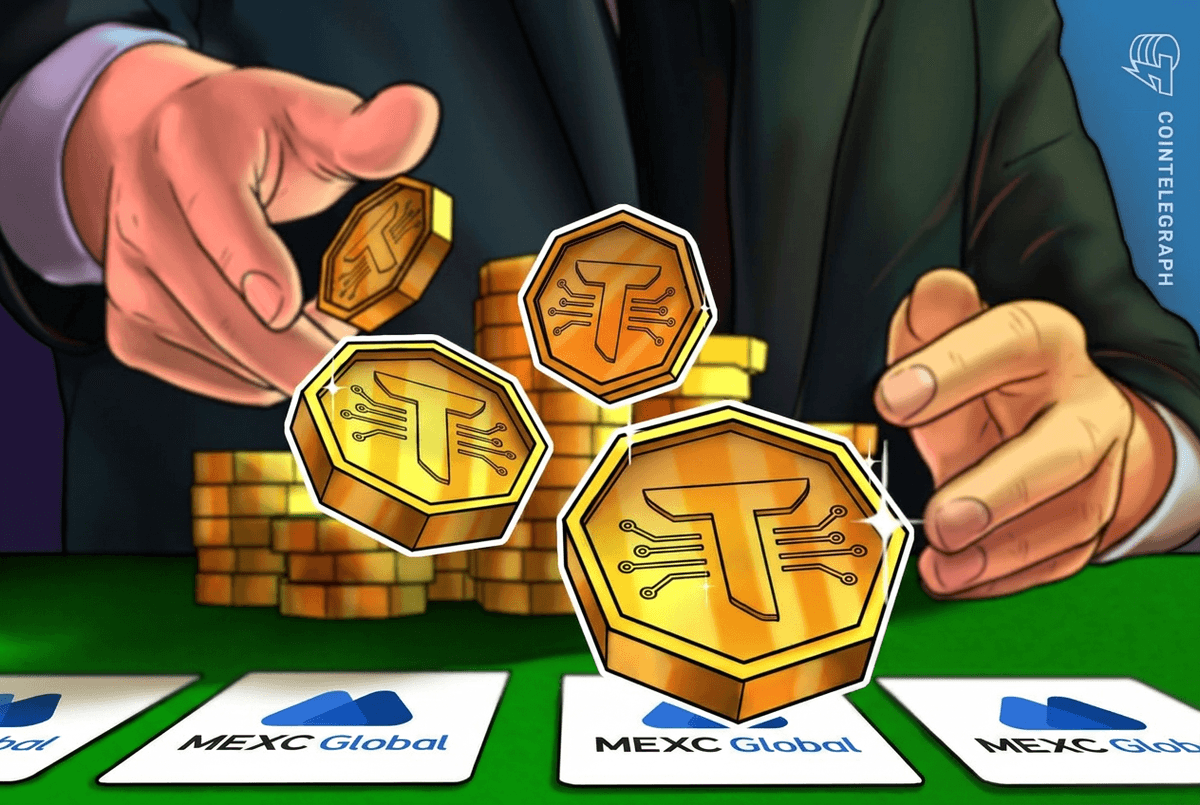
The integration with validator Yuma gives millions of MEXC users access to Bittensor, an AI-focused blockchain whose ecosystem now spans 128 specialized subnets.

What is AI crypto? Learn how AI and blockchain intersect, top AI crypto coins like NEAR and Bittensor, trading bots, and key risks to know in 2026.