What is the current price of Mode?
The current price of Mode is $0.0001275 with a 18.51% change in the last 24 hours.
Supply and ATH/ATL data provided by CoinGecko

Hyperliquid perpetuals only. One snapshot every 5 minutes, up to 20 returned price levels per side. Liquidity beyond those levels is unknown. This is not a liquidation heatmap or a fill estimate.
Loading recorded snapshots…
Prices and notionals are USD-equivalent venue units, with USDC collateral. No currency conversion is applied. Notional = venue price × base-asset size. Contract specifications
Derivatives and mapped ecosystem data, with source timings and coverage.
Mode is an Ethereum Layer 2 network built on Optimism's OP Stack and part of the Optimism Superchain, and MODE is its governance and staking token. The project now positions itself as a home for "DeFAI" or "AiFi": DeFi applications and onchain AI agents that trade, manage treasuries and chase yield on behalf of users. It matters because it is one of the OP Stack chains that has tried to stand out through a specific niche (AI-driven finance) rather than competing on generic low fees alone.
Mode mainnet uses ETH as its gas token and runs under chain ID 34443, with its own block explorer at explorer.mode.network. Official material lives on the Mode website and in the Mode docs.
The official website and docs pages reviewed for this article do not name the founding team, so founder details are treated here as undocumented. What the project does document:
Mode is an optimistic rollup. Transactions are executed on Mode, batched, and posted to Ethereum, which acts as the settlement and data layer. Because it uses the standard OP Stack, Mode shares tooling, bridging conventions and upgrade paths with other Superchain networks, and Ethereum developers can deploy existing Solidity contracts without rewriting them.
On top of that base layer, Mode's current focus is agent-driven finance. The docs describe AI agents that interact onchain to perform tasks such as MEV searching, arbitrage and smart contract auditing, and "AI-to-AI" interactions in which agents transact with each other in a non-custodial way. Refer to the official docs for the latest implementation details, as this layer is still evolving.
MODE is not the gas token on Mode (fees are paid in ETH). Its documented roles are:
Staking Users stake MODE (or MODE-USDC Balancer pool tokens) through the Mode dashboard. The staking docs describe a 7-day unstaking cooldown.
Voting on the ecosystem The website describes MODE stakers voting for their favourite protocols, which directs incentives within the ecosystem.
Rewards The staking docs describe weekly OP distributions to stakers (20,000 OP per week at the time the page was written) and points multipliers of 1.25x or 1.5x for users whose staked MODE equals 25% or 50% of their portfolio value. The website also advertises a share of $2 million in OP rewards for staking, governance participation and app usage. Reward programs change by season, so check the current docs.
MODE exists as an ERC-20 on Mode (contract 0xdfc7c877a950e49d2610114102175a06c2e3167a) and on Ethereum, Base and OP Mainnet (0x084382d1cc4f4dfd1769b1cc1ac2a9b1f8365e90).
Most OP Stack chains compete on cost and ecosystem grants. Mode's differentiator is its bet on AI agents as the main users of DeFi: it pairs a low-fee L2 with agent tooling, a perpetuals venue and forecasting data aimed at automated strategies. Being inside the Superchain also means it benefits from shared Optimism infrastructure and incentive programs.
Mode inherits the OP Stack security model: transaction data is posted to Ethereum, and withdrawals back to Ethereum go through the standard optimistic bridge process. As with other OP Stack chains, block ordering depends on a sequencer, and the exact configuration of proofs, sequencing and upgrade keys depends on current protocol settings; check the official docs and independent L2 risk trackers for the latest status. Individual apps on Mode carry their own smart contract risk on top of the chain's security.
Mode is a live test of whether AI agents can become meaningful onchain users, built on a mainstream rollup stack rather than an experimental chain. For anyone following the Superchain or the "DeFAI" niche, it is one of the more focused examples.
MODE trades on centralized exchanges and on decentralized exchanges on Mode, Ethereum, Base and OP Mainnet. Always confirm the contract address from the official docs before trading on a DEX.
Listings change over time, so check each exchange's own asset list for a MODE market before depositing, and confirm which network the exchange supports for deposits and withdrawals.
MODE is a standard ERC-20, so any EVM wallet (for example MetaMask, Rabby or a hardware wallet such as Ledger) can hold it once the Mode network (chain ID 34443) or the relevant chain is added. Staking happens through the official Mode dashboard, so only connect wallets to links from the official site.
Track Mode live price, chart, market cap, and volume in real time. Practice mock trading and demo trading for Mode on CoinRithm before using real money.
Use a crypto paper trading account to demo trade Mode with real-time prices, AI trade feedback, and trading leagues. Test strategies, learn risk management, and build confidence before trading Mode with real money.
Read the complete paper trading guideThe current price of Mode is $0.0001275 with a 18.51% change in the last 24 hours.
The daily trading volume is $3,168.72 representing a 103.10% change in the past 24 hours.
The market capitalization of Mode is $985,613, ranking #897 globally.
The fully diluted valuation (FDV) of Mode is $1,274,500, calculated assuming the maximum supply of 10,000,000,000 MODE is in circulation.
Circulating: 7,733,333,334. Total: 10,000,000,000. Max: 10,000,000,000.
In the last 24 hours, Mode traded between a low of $0.0001048 and a high of $0.0001292.





 MODE/USDTTether USDT0.0001275 USDT
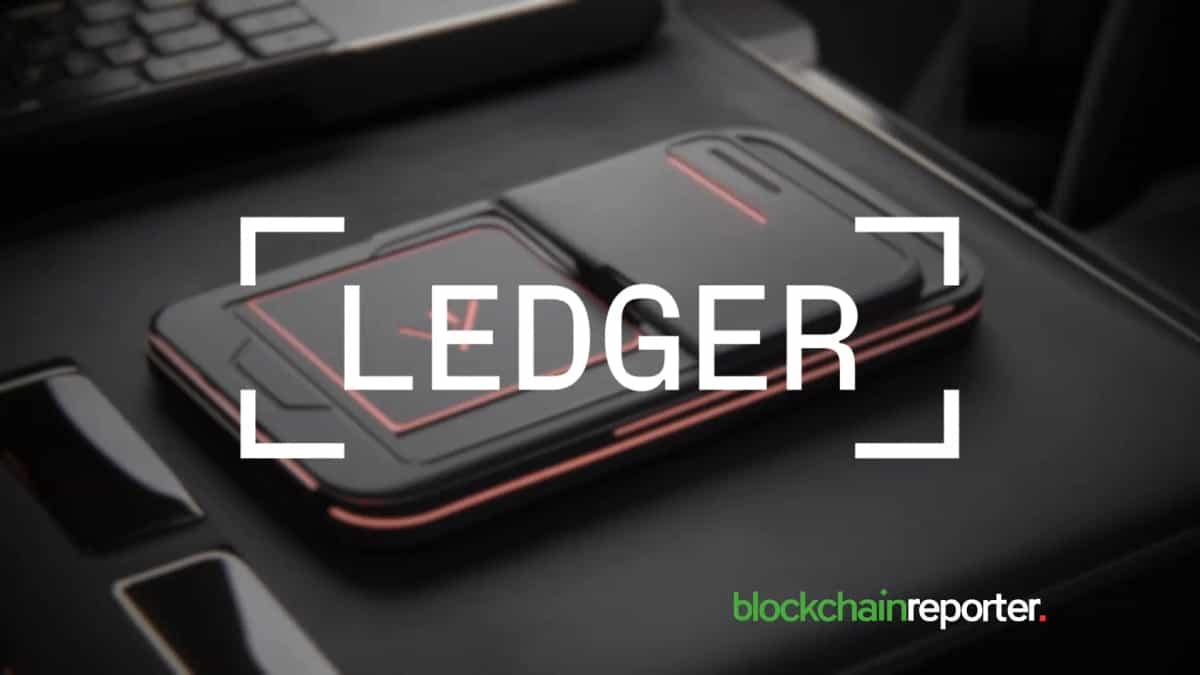
Ledger's Atom is an $899 Android-based security device that runs everyday apps while signing crypto and AI agent approvals in a hardware-protected mode.

Ledger’s Atom will run apps like WhatsApp and Instragram and let users switch between smartphone functions and a protected mode for managing digital assets.

Even if Justin Drake’s prediction that AI could break cryptography proves correct, critics say “bunker mode” is an impractical suggestion that’s unlikely to protect your crypto.

The plan concerns public payments, where about seven in 10 ZEC sit. A separate wallet tool would keep balance checks from revealing which addresses belong together.

Bitcoin rebounded to $82,000 as Trump ruled out an Iran strike before the midterms, while crypto security experts pushed back on “bunker mode” fears.

As crypto debates whether holders should move funds before AI or quantum advances expose wallet keys, custody firms face a separate problem: upgrading systems before an emergency migration.