What is the current price of Gravity (by Galxe)?
The current price of Gravity (by Galxe) is $0.003767 with a 4.68% change in the last 24 hours.
Supply and ATH/ATL data provided by CoinGecko

Hyperliquid perpetuals only. One snapshot every 5 minutes, up to 20 returned price levels per side. Liquidity beyond those levels is unknown. This is not a liquidation heatmap or a fill estimate.
Loading recorded snapshots…
Prices and notionals are USD-equivalent venue units, with USDC collateral. No currency conversion is applied. Notional = venue price × base-asset size. Contract specifications
Derivatives and mapped ecosystem data, with source timings and coverage.
Gravity is an EVM-compatible layer 1 blockchain built by the team behind Galxe, and G is its native token. Gravity pairs a parallel EVM execution engine with a BFT consensus protocol derived from AptosBFT. Its distinguishing feature is a native oracle: the same validators that produce blocks also observe external data, vote on it, and commit it to state, so cross-chain and off-chain data arrives with the chain's own security rather than through a separate oracle network or a bridge multisig.
G does two jobs at once. It is the gas and staking asset of the Gravity network, and it is the utility token of the Galxe ecosystem, where it pays for products such as Galxe Quest, Passport, and Score.
Official sources:
Gravity comes from Galxe, the web3 credential and growth platform co-founded by Harry Zhang and Charles Wayn. The chain was designed to move Galxe's own backend on chain: the litepaper explains that the loyalty points system alone was sustaining tens of transactions per second, which is why the team concluded it needed roughly one gigagas per second of headroom rather than a general-purpose rollup.
The rollout happened in two stages. Gravity Alpha Mainnet went live in 2024 as an Ethereum rollup on the Arbitrum Nitro stack, running as chain ID 1625. The sovereign layer 1, Gravity Mainnet, launched in 2026 as chain ID 127001 with its own AptosBFT-derived consensus. Both networks are reachable today, but the Alpha Mainnet is being retired: the documentation instructs holders to move all assets back to Ethereum before November 1, 2026, ahead of the rollup being unsettled in December 2026.
Consensus Gravity uses an AptosBFT-derived protocol with pipelined stages, parallelizing consensus on the next block with execution of the current one. This is a fast-finality BFT design, not a longest-chain race, so blocks settle in a single confirmation window rather than probabilistically.
Native oracle A system contract at a fixed address accepts data recorded only by a privileged consensus-time caller. It enforces strictly sequential nonces per source, so replays are impossible, and routes payloads to registered callback handlers. If a handler reverts, the oracle still stores the payload, so consensus-attested truth and application-level interpretation stay separate. The Ethereum to Gravity asset bridge is the first application built on it.
Staking and validation Validators run under AptosBFT backed by staked G through governance-approved stake pools. At genesis, 7,000,000 G was allocated as initial validator stake across seven launch validators, with a matching 7,000,000 G locked in the canonical bridge contract on Ethereum to back it.
G is used for:
G was issued with an initial total supply of 12,000,000,000, and the same ERC-20 address is deployed independently on Ethereum, BNB Chain, and Base. Those three deployments are not a single omnichain token; they share an address but each has its own owner multisig, and there is no canonical bridge between them. G locked in the layer 1 bridge contract on Ethereum permanently backs native G and should be treated as removed from the ERC-20 supply.
Against Aptos, whose consensus lineage it shares, Gravity keeps full EVM compatibility rather than the Move virtual machine, so existing Ethereum tooling works unchanged. Against rollups, including its own former Alpha Mainnet, it trades Ethereum-inherited settlement for sub-second BFT finality, which is a security tradeoff and not simply a performance win. Against other parallel-EVM layer 1s, the differentiator is the enshrined oracle rather than execution speed alone.
One point deserves care. The frequently quoted figures of roughly 9,500 to 11,000 transactions per second and about 200 millisecond block times come from a documented three-validator test cluster, not from production mainnet under adversarial load. Treat them as benchmark results.
Gravity's security comes from staked G under AptosBFT, with the standard byzantine fault tolerance threshold. Validator onboarding is currently invite-only and stake pools must be approved through governance, so the validator set is permissioned rather than open. Hardforks are compiled into node releases and activate at fixed times; a node running old rules fails stop rather than serving a private fork.
Note that the 2024 litepaper described a restaking-secured model using EigenLayer and Babylon. The documentation now states plainly that this is not part of the current network, which launched with native G staking under a permissioned validator set. Older third-party descriptions of Gravity as a restaking-powered chain are out of date.
Gravity is a rare case of a large consumer web3 application building its own base layer and then publishing that base layer as reusable infrastructure. The native oracle is a genuinely different design choice: rather than accepting that external data has to be trusted separately, it folds data attestation into consensus. Whether that generalizes is an open question, but it is a substantive engineering position rather than a marketing one.
G trades on a wide range of centralized exchanges and on decentralized venues across Ethereum, BNB Chain, and Base. Users who need native G on Gravity Mainnet can also withdraw directly from supporting exchanges or use the canonical bridge from Ethereum. Availability and pairs vary by jurisdiction.
G has commonly been available on:
Common pairs include G/USDT and G/USDC where supported.
After purchase, G can be held:
Because the same address is deployed on three chains and the L1 uses a separate native asset, confirm the network for every deposit and withdrawal. Also confirm whether a bridge route actually exists in the direction you need, since the L1 canonical bridge currently runs one way.
You can compare G with related ecosystems on Coinrithm:
Track Gravity (by Galxe) live price, chart, market cap, and volume in real time. Practice mock trading and demo trading for Gravity (by Galxe) on CoinRithm before using real money.
Use a crypto paper trading account to demo trade Gravity (by Galxe) with real-time prices, AI trade feedback, and trading leagues. Test strategies, learn risk management, and build confidence before trading Gravity (by Galxe) with real money.
Read the complete paper trading guideThe current price of Gravity (by Galxe) is $0.003767 with a 4.68% change in the last 24 hours.
The daily trading volume is $560,476 representing a 109.76% change in the past 24 hours.
The market capitalization of Gravity (by Galxe) is $27,247,063, ranking #451 globally.
The fully diluted valuation (FDV) of Gravity (by Galxe) is $45,206,460, calculated assuming the maximum supply of 12,000,000,000 G is in circulation.
Circulating: 7,232,700,000. Total: 12,000,000,000. Max: 12,000,000,000.
In the last 24 hours, Gravity (by Galxe) traded between a low of $0.003583 and a high of $0.003877.







 G/USDTTether USDT0.003767 USDT
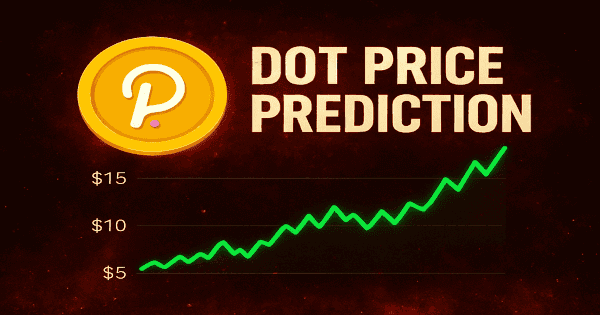
Polkadot rose 5.12% to $1.15 on October 16, 2026, clearing the $0.989–$1.09 October range forecast published by Changelly on October 15. Binance futures open interest declined 2.94% alongside the g... (Read More)

Bitcoin Magazine Peter Todd Joins MARA to Lead Private Mempool Slipstream Bitcoin O.G. Peter Todd has joined the MARA Foundation as lead maintainer of Slipstream, the miner’s private Bitcoin mempool service. Announced by the foundation on Thursday, the new role will see Todd responsible for developing and running the service. Slipstream lets users send bitcoin transactions straight to MARA Pool, the company’s mining pool, without going […] This post Peter Todd Joins MARA to Lead Private Mempool Slipstream first appeared on Bitcoin Magazine and is written by Mathew Di Salvo.

Hivemind's round brings M&G's Alex Seddon onto its board as the firm builds out tokenization infrastructure and new institutional partnerships.

Blueprint Finance has completed a strategic funding round led by Polychain Capital to expand Concrete, its on-chain vault infrastructure for institutions, protocols, and asset managers. Blueprint Finance said on Aug. 19 that Bullish, Keyrock, BitGo, FalconX, G-20, Flowdesk, JPEG Trading,…

The data listed cryptos that are in the accumulation phase, showing assets that are likely to witness future price spikes due to investor acquisitions.