What is the current price of Everscale?
The current price of Everscale is $0.001240 with a 2.94% change in the last 24 hours.
Supply and ATH/ATL data provided by CoinGecko

Hyperliquid perpetuals only. One snapshot every 5 minutes, up to 20 returned price levels per side. Liquidity beyond those levels is unknown. This is not a liquidation heatmap or a fill estimate.
Loading recorded snapshots…
Prices and notionals are USD-equivalent venue units, with USDC collateral. No currency conversion is applied. Notional = venue price × base-asset size. Contract specifications
Derivatives and mapped ecosystem data, with source timings and coverage.
Everscale is a proof-of-stake layer 1 blockchain descended from the Telegram Open Network (TON) design, built around dynamic sharding and an asynchronous, message-based smart contract model. EVER is its native coin, used for fees, storage rent and validator staking. It matters because it is a live network that implements TON-style "infinite sharding" and its own virtual machine (TVM), making it a distinct alternative to EVM chains for developers who need high throughput.
Everscale is a general-purpose smart contract platform. Its official site describes it as a network built for scalability and developer convenience, with 1.67-second block times, suitable for applications such as games and social products that need many cheap transactions.
Unlike Ethereum, where contracts call each other synchronously, every interaction on Everscale is a message. Contracts, including ordinary wallets, are all smart contracts that exchange messages asynchronously. This design is what lets the network split work across shards.
Everscale's documentation publishes a chronicle of the project:
The network was launched by the Free TON community rather than by a single company. EverX and Broxus (whose nodekeeper tool is used in the validator guide) are among the visible development contributors.
According to the documentation, the network currently has two workchains: a masterchain for synchronization and governance, and a main workchain for smart contracts. The main workchain can be split into anywhere from 1 to 256 shards, each with its own validator group.
When a shard carries too many transactions, it splits in two by smart contract address range, and the resulting shards can split again. A block records processed messages, new outgoing messages and state changes, so validators in one shard can follow other shards without re-executing every transaction.
Consensus is Catchain, a proof-of-stake Byzantine Fault Tolerant algorithm designed by Nikolai Durov. Validators are chosen in stake-based elections, rotate block-proposer roles round-robin, and a block is committed once two-thirds of validator votes agree. The docs also describe SMFT, a newer consensus design in development that randomly assigns validators to re-check other shards' blocks.
Smart contracts run on the TVM and are usually written in T-Sol, an extended Solidity dialect for TVM.
0x1ffefd8036409cb6d652bd610de465933b226917) and BNB Chain.Its combination of dynamic sharding and storage rent is unusual. Sharding is applied to computation, not only data, and splits happen automatically under load. Storage rent tackles state bloat directly by making contracts pay for the space they occupy. Contract code can also be upgraded, which differs from Ethereum's immutable default.
Security comes from staked EVER. Validators run demanding hardware (the guide recommends 12 CPU cores, 64 GB RAM and NVMe storage), must keep accurate clocks, and have their stake slashed if they misbehave or go offline during validation. Masterchain validators coordinate shard configuration and cross-shard messaging.
Everscale keeps alive an ambitious branch of blockchain design: native, automatic sharding with an actor-style message model. Whether or not it wins large market share, it offers a working reference for how a sharded, asynchronous chain behaves in production.
EVER trades on decentralized venues, including FlatQube on Everscale itself, and it may also be available on centralized exchanges. Bridged EVER tokens also exist on Ethereum and BNB Chain. Check that a venue supports the native network you intend to withdraw to.
Native EVER is best held in an Everscale wallet such as SparX or EVER Wallet, where you control the seed phrase. Bridged EVER on Ethereum or BNB Chain can be held in any wallet for those chains, but it is a different representation than native EVER.
Track Everscale live price, chart, market cap, and volume in real time. Practice mock trading and demo trading for Everscale on CoinRithm before using real money.
Use a crypto paper trading account to demo trade Everscale with real-time prices, AI trade feedback, and trading leagues. Test strategies, learn risk management, and build confidence before trading Everscale with real money.
Read the complete paper trading guideThe current price of Everscale is $0.001240 with a 2.94% change in the last 24 hours.
The daily trading volume is $878,087 representing a 160,571.60% change in the past 24 hours.
The market capitalization of Everscale is $2,461,254, ranking #839 globally.
The fully diluted valuation (FDV) of Everscale is $2,624,863, calculated assuming the total supply of 2,117,508,291 EVER is in circulation.
Circulating: 1,985,523,041. Total: 2,117,508,291. Max: N/A.
In the last 24 hours, Everscale traded between a low of $0.001107 and a high of $0.0027.









 EVER/USDTTether USDT0.001240 USDT

The deployer bought 79% of the supply for about $9,300 and named a single address the permanent, unchangeable recipient of every creator fee the coin will ever pay. Pump.fun's own profile page titles that address “Kimchi”
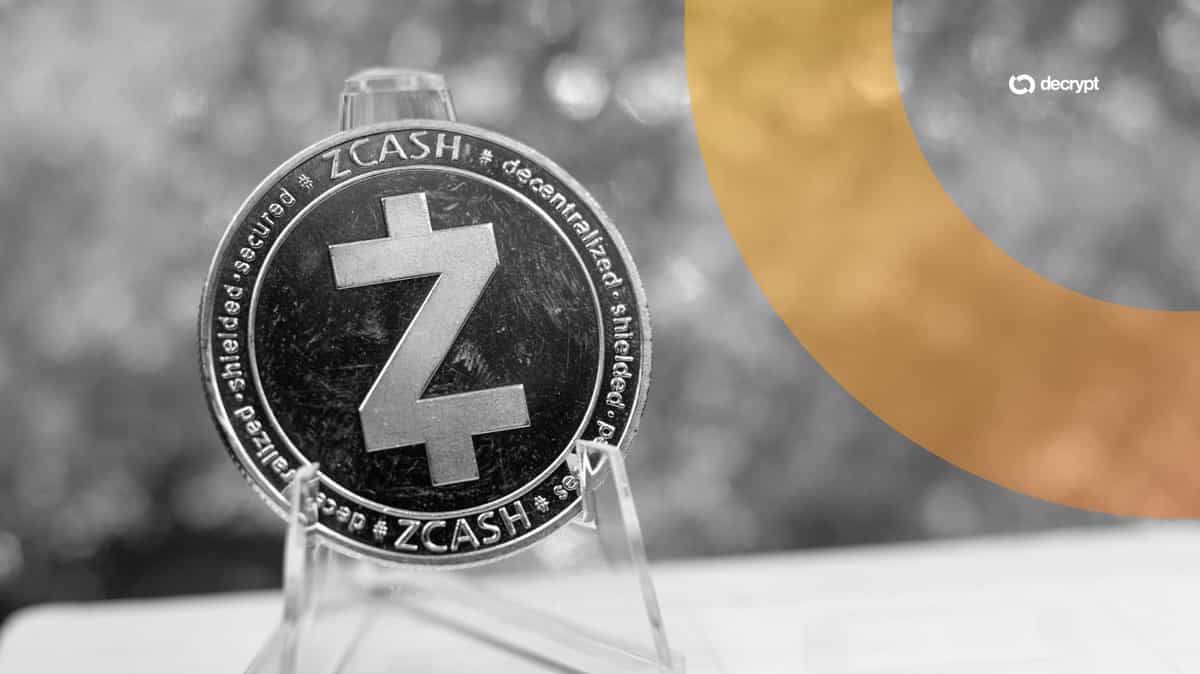
Zakura says a single published Zcash address could let a future quantum attacker link every payment a wallet has ever received.

Crypto projects are rethinking their marketing strategies in 2026 as traditional promotional campaigns struggle to turn short term attention into sustained engagement. Launching a token is easier than ever. Getting people to notice it is not. New projects show up…

AI has made it cheap to link wallet addresses to the people behind them, and the permanence of the blockchain means records don’t age out. Michael Zhao of Grayscale Research explains how Zcash’s shielded transactions address this problem, and why close to 29% of all ZEC ever mined now sits in the shielded pool.

Biggest crypto casino wins in history, from an 11,000 BTC dice payout to a $48M Polymarket profit, all verified on the blockchain with transaction proof.
NVDA is trading at $230.89, pressing right into upper Bollinger Band resistance while riding the most explosive corporate buyback ever announced — $235 billion in total authorization. The next 7–30... (Read More)