Wat is de huidige prijs van Venice Token?
De huidige prijs van Venice Token is € 22,61 met een verandering van 4,72% in de afgelopen 24 uur.
Aanbod- en ATH/ATL-gegevens geleverd door CoinGecko

Alleen Hyperliquid-perpetuals. Eén momentopname per 5 minuten, maximaal 20 prijsniveaus per zijde. Liquiditeit daarbuiten is onbekend. Dit is geen liquidatieheatmap of uitvoeringsschatting.
Opgeslagen momentopnamen laden…
Prijzen en nominale waarden zijn USD-equivalente platformeenheden met USDC als onderpand. Er vindt geen valutaomrekening plaats. Nominale waarde = platformprijs × hoeveelheid basisactief. Contractspecificaties
Derivaten en gekoppelde ecosysteemgegevens, met brontijden en dekking.
Venice Token (VVV) is de token achter Venice, een platform voor generatieve AI dat tekst-, beeld-, video- en audiomodellen aanbiedt via een chatinterface en een OpenAI-compatibele API, met privacy als uitgesproken ontwerpprioriteit. VVV is een staking-asset en geen betaaltoken: wie de token staket, krijgt recht op een deel van de inferentiecapaciteit van Venice zonder kosten per verzoek, oftewel een aanspraak op rekenkracht in plaats van een vooraf betaald saldo. De token is op 27 januari 2025 gelanceerd op Base, en sinds augustus 2025 is die aanspraak getokeniseerd als DIEM.
Officiële bronnen:
Venice is opgericht door Erik Voorhees, ook oprichter van de exchange ShapeShift. Het platform werd in mei 2024 gelanceerd en de token volgde in januari 2025. De positionering komt voort uit de door Voorhees uitgesproken zorg dat gangbare aanbieders elk bericht bewaren. Venice is een bedrijf en geen DAO, dus het wordt geleid door het eigen team en niet door de tokenhouders.
Het mechanisme kent drie lagen. Een houder staket VVV en ontvangt sVVV, een bewijs van de gestakete positie. Die sVVV wordt vergrendeld tegen de actuele mintkoers om DIEM te minten, waarbij elke gestakete DIEM recht geeft op één dollar Venice-tegoed per dag, dat om 00:00 UTC wordt vernieuwd. De mintkoers stijgt naarmate het aanbod groeit.
Venice heeft op 20 augustus 2025 een eerdere naar rato verdeling op basis van benutting geschrapt en de rekenkracht zelf getokeniseerd, waardoor een DIEM-toewijzing niet langer verwatert wanneer het gebruik stijgt. DIEM is overdraagbaar, zodat een houder rekenkracht kan verkopen zonder de VVV-hoofdsom te verkopen. Het unstaken van DIEM kent een afkoelperiode van één dag; om de VVV achter geminte DIEM vrij te maken moet die eerst worden verbrand, gevolgd door zeven dagen wachten.
VVV had een genesisvoorraad van 100.000.000 tokens: 50% via airdrop naar gebruikers van Venice en naar crypto-AI-projecten op Base, 35% behouden door Venice (10% team, 25% treasury), 10% naar incentives en 5% naar liquiditeit. De uitgifte begint bij 14 miljoen per jaar, een aanvankelijk tempo van 14% dat in de loop van de tijd daalt en wordt uitgekeerd aan stakers.
Staking activeert de aanspraak op rekenkracht: een niet-gestakete VVV-token levert geen inferentietoewijzing en geen uitgifte op. Dit is een echt work-tokenmodel, waarin de waarde de vraag naar een dienst volgt in plaats van protocolkosten, en het geeft geen governancerechten.
De meeste AI-tokens betalen rekenkracht per verzoek of besturen een netwerk. VVV doet geen van beide. Het is een eeuwigdurende, niet vervallende aanspraak naar rato op de inferentiecapaciteit van een bedrijf, en DIEM maakt die aanspraak overdraagbaar, waardoor rekenkracht een afzonderlijk asset wordt.
Bittensor coördineert een gedecentraliseerd netwerk van modelsubnetten en beloont miners en validators, waardoor TAO een netwerkincentive-token is. Akash Network en io.net zijn marktplaatsen waar de token hardware van derden koopt, en de Artificial Superintelligence Alliance voegt agent- en data-infrastructuur samen. Venice verschilt wezenlijk: een centraal geëxploiteerd product met een token dat aan de capaciteit ervan is gekoppeld, wat het aanbod eenvoudiger en het tegenpartijrisico groter maakt.
Ontwikkelaars en AI-agents die doorlopende inferentie nodig hebben zonder facturering per verzoek, het belangrijkste gebruik. Toepassingen met voorspelbare dagbudgetten, waar een vaste toewijzing beter te plannen is dan uitgaven op basis van verbruik. Gebruikers die privacy willen of toegang tot modellen die gangbare aanbieders beperken.
VVV, sVVV en DIEM zijn ERC-20-tokens op Base, dus de bewaring erft de beveiliging van Base, terwijl staking en afkoelperioden op de contracten van Venice draaien. Beveiliging op dienstniveau staat daar los van: verzoeken gaan via versleutelde TLS door de proxy van Venice naar de modelaanbieders, en de inhoud van prompts en antwoorden wordt bij normale inferentie niet opgeslagen of gelogd, waarbij strengere modi TEE-isolatie toevoegen.
Het grootste risico is dat het nut van de token afhangt van één privébedrijf dat moet blijven opereren en de aanspraak op rekenkracht moet honoreren; geen enkel protocol dwingt de inwisseling van DIEM af als Venice stopt met het leveren van inferentie. Uitgifte verwatert houders die niet staken, en de mintkoers stijgt naarmate het DIEM-aanbod groeit, dus de per token opvraagbare rekenkracht ligt niet vast. Het inhoudsbeleid brengt daarnaast regelgevings- en betaalverwerkersrisico met zich mee dat de meeste aanbieders vermijden.
Venice is een van de meer samenhangende pogingen om een echte vraag te beantwoorden: hoe koop je AI-rekenkracht op een manier die niet per verbruik wordt afgerekend, niet wordt afgeluisterd en niet naar believen door een aanbieder kan worden ingetrokken. Staken voor capaciteit en die capaciteit vervolgens verhandelbaar maken is een concreet antwoord.
VVV wordt verhandeld op gedecentraliseerde exchanges op Base, waar het werd gelanceerd met liquiditeit op Aerodrome, en op meerdere gecentraliseerde exchanges. Noteringen veranderen, dus raadpleeg het marktoverzicht op deze pagina. Bevestig bij een opname dat het netwerk Base is; een andere chain betekent permanent verlies.
VVV is een ERC-20 op Base, dus elke Ethereum-compatibele wallet die voor Base is ingesteld kan de token bewaren, en hardware wallets bieden meer bescherming voor langetermijnbezit. Stakers hebben een wallet nodig die de contracten van Venice kan bereiken. Let erop dat sVVV en DIEM aparte tokens zijn en dat VVV dat op een exchange staat niet kan worden gestaket.
Volg de live prijs van Venice Token, de grafiek, marktkapitalisatie en volume in realtime. Oefen mock trading en demo trading voor Venice Token op CoinRithm voordat je echt geld gebruikt.
Gebruik een crypto paper trading account om Venice Token te demo traden met realtime prijzen, AI trade feedback en trading leagues. Test strategieen, leer risicobeheer en bouw vertrouwen op voordat je Venice Token met echt geld handelt.
Lees de volledige paper trading gidsDe huidige prijs van Venice Token is € 22,61 met een verandering van 4,72% in de afgelopen 24 uur.
Het dagelijkse handelsvolume is € 12.893.742 wat een verandering van 8,53% in de afgelopen 24 uur vertegenwoordigt.
De marktkapitalisatie van Venice Token is € 1.097.893.023, wereldwijd gerangschikt op #64.
De volledig verwaterde waardering (FDV) van Venice Token is € 1.834.635.133, berekend op basis van een totale voorraad van 81.156.260 VVV.
In omloop: 48.566.001. Totaal: 81.156.260. Maximaal: N/A.
In de afgelopen 24 uur werd Venice Token verhandeld tussen een laag van € 21,12 en een hoog van € 23,44.





 VVV/USDTTether USDT25,39 USDT
21shares launches Lighter and Venice Token ETPs in Europe, offering brokerage access to LIT and VVV with 2.50% annual fees on Xetra and SIX exchanges.
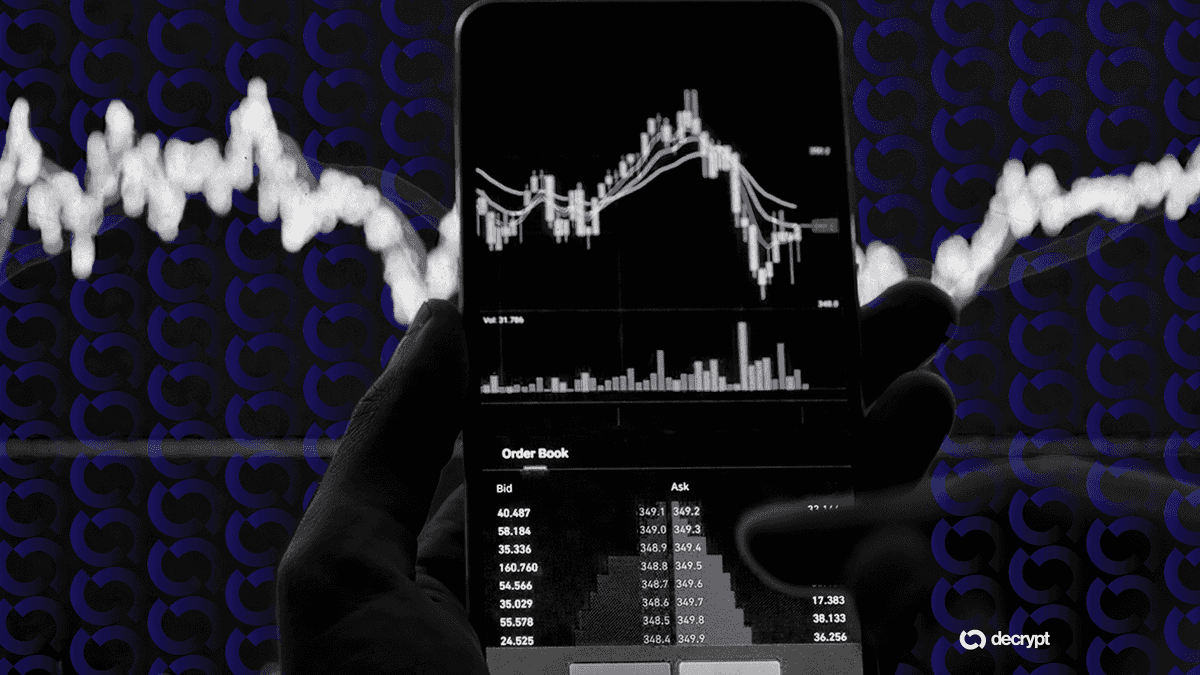
Venice (VVV) has clawed back from under a dollar to a record $34, and the pitch behind it is simple: an AI chatbot that promises to forget you the moment you close the tab.

Concerns over frontier AI labs stealing user data has driven demand for private inference (or at least tokens tied to private inference).

Kalshi has launched perpetual contracts for BNB, ADA, WLD, AAVE and VVV, expanding regulated crypto derivatives access for U.S. traders.

Bitcoin rose 1.2% above $64,000 as VVV and HYPE outperformed, while Worldcoin and Filecoin led losses across a mixed crypto market.

Audiera ($BEAT), Shiba Inu ($SHIB) and Venice Token ($VVV) lead this week’s top crypto gainers, with strong price surges alongside $ONDO, $UNI, $XMR, and $AAVE.