Want to understand prediction markets before picking a platform, event, or trading app?
If you are searching for prediction markets, what are prediction markets, or crypto prediction markets, this page is the category-level explainer.
Prediction markets are markets where people trade contracts on future outcomes. In crypto, they often use on-chain settlement, stablecoins like USDC, and wallets instead of bank-funded brokerage accounts. The core idea is simple: prices act like crowd-estimated probabilities.
This guide is the category hub for CoinRithm's prediction-markets content. It explains what prediction markets are, how they work, why crypto matters here, what risks beginners miss, and where to go next depending on whether you want to learn, compare platforms, or research live markets.
TL;DR
- Prediction markets let you trade on future events like elections, crypto prices, sports, and macro decisions.
- Prices usually range from
$0.00to$1.00and map loosely to probabilities. - Crypto-native prediction markets often use USDC, wallets, and on-chain settlement.
- Polymarket is the best-known crypto-native platform, while Kalshi is the most recognizable regulated US platform.
- Use CoinRithm Prediction Markets to discover live markets and research price moves before you trade anywhere.
- Treat prediction markets as risk-bearing research tools, not guaranteed profit machines.
What Are Prediction Markets
Prediction markets are platforms where people buy and sell contracts based on whether future events will happen.
Those events can include:
- election outcomes
- whether the Fed will cut rates
- whether Bitcoin will hit a price target
- who will win a sports tournament
- whether a company or government action will happen by a set date
Instead of buying a stock or a coin, you are buying exposure to an outcome.
At a high level:
- if the outcome happens, winning contracts pay out
- if the outcome does not happen, losing contracts expire worthless
- traders can usually exit before final resolution
That makes prediction markets useful for:
- speculation
- research
- hedging event risk
- tracking crowd sentiment in real time
If you want the platform-specific version of this topic, read What Is Polymarket?. If you want to compare where to trade, read Best Prediction Markets in 2026. If you already know the two names you are choosing between, read Kalshi vs Polymarket. If pricing and odds are the main confusion, read How Prediction Market Probabilities Work. If fees are the real sticking point, read Prediction Market Fees Comparison. If legality is your main concern, read Are Prediction Markets Legal in the US?.
How Prediction Market Prices Work
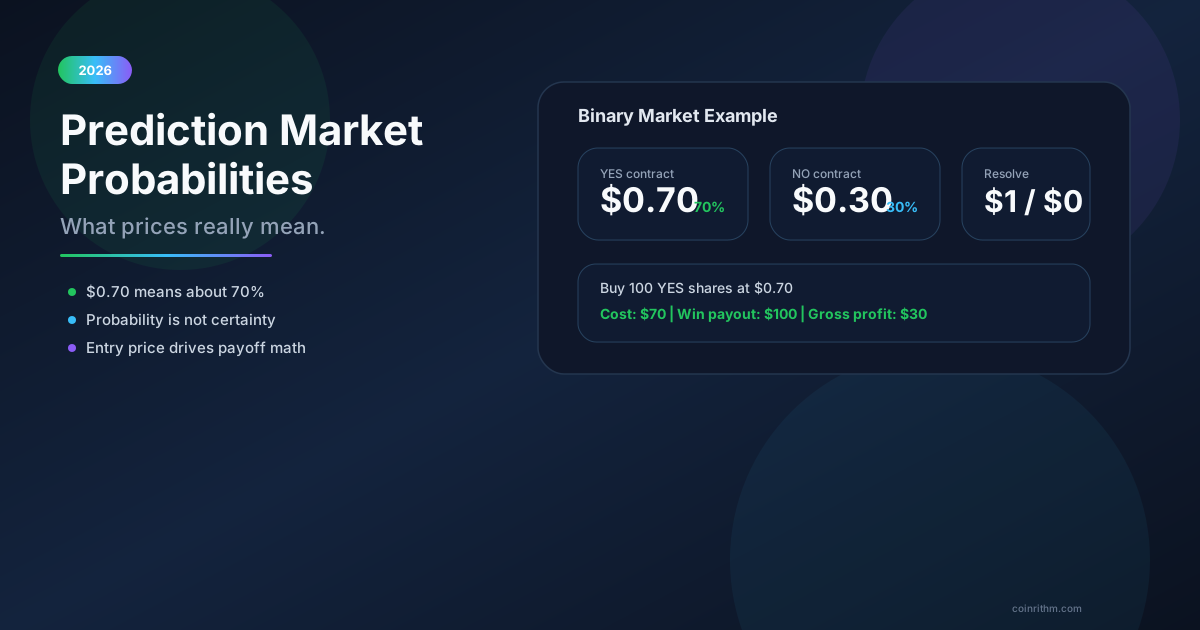
The key idea is that price acts like implied probability.
In most simple yes/no markets:
- a
Yescontract trading at$0.70implies roughly a70%market-estimated chance - a
Nocontract trading at$0.30implies roughly a30%chance of the opposite
When the market resolves:
- winning shares settle at
$1.00 - losing shares settle at
$0.00
So if you buy 100 shares at $0.70:
- your cost is
$70 - if the market resolves in your favor, you receive
$100 - your gross profit is
$30
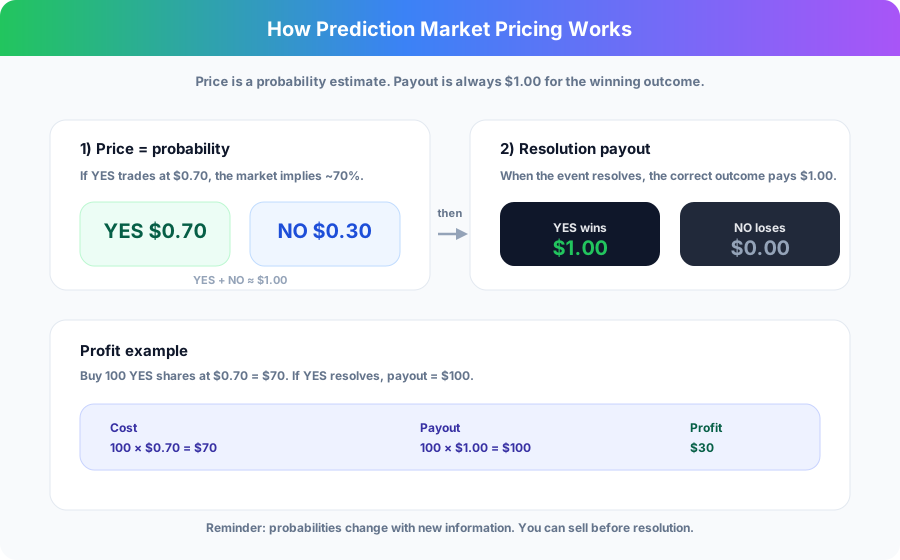
Prices are best understood as probability estimates, not certainties.
Important nuance:
- markets can be wrong
- thin liquidity can distort prices
- hype can temporarily overpower careful research
- high probability does not mean guaranteed outcome
The best way to use prediction-market prices is to treat them as live information signals, not absolute truth.
How Prediction Markets Work in Crypto
Crypto-native prediction markets use the same core idea but run on blockchain rails.
In practice, that usually means:
- funding with USDC or another stablecoin
- connecting a wallet instead of a bank account
- settling trades on-chain
- using an oracle or defined resolution source to determine the final outcome
The most recognizable example is Polymarket, which runs on Polygon.
The beginner flow usually looks like this:
- Create or connect a wallet.
- Fund the wallet with USDC on the correct network.
- Open a market and read the resolution rules carefully.
- Buy
YesorNo, or choose among multiple outcomes. - Monitor price movement, liquidity, and event developments.
- Exit before resolution or hold until final settlement.
What crypto changes:
- settlement becomes more transparent
- global access is often broader
- you need to understand wallets and network rails
- stablecoin funding becomes part of the beginner experience
What crypto does not change:
- the need to read rules
- the possibility of losing money
- the need for position sizing
- the importance of liquidity and fees
Prediction Markets vs Sports Betting
Prediction markets and betting overlap, but they are not identical.
| Aspect | Prediction Markets | Sports Betting |
|---|---|---|
| Pricing | Set by market participants | Set by bookmaker |
| Main function | Forecasting and price discovery | Entertainment and wagering |
| Exit before settlement | Usually yes | Often limited or platform-specific |
| House edge | No built-in bookmaker model | Usually yes |
| Market types | Politics, macro, crypto, sports, regulation | Mostly sports and casino-adjacent outcomes |
Prediction markets often attract people who want to:
- express a view on an event
- hedge a position or thesis
- see what the crowd believes in real time
- track event risk around crypto
That is one reason this topic matters for CoinRithm. People using prediction markets are often also tracking:
- Bitcoin and Ethereum direction
- macro catalysts
- ETF decisions
- regulatory headlines
- event-driven market sentiment
Why People Use Prediction Markets
Different users come in with different goals.
Beginners use them to understand how event probabilities move when news changes.
Traders use them to express short-term views on elections, Fed decisions, or crypto price milestones.
Researchers use them as a live signal for crowd sentiment.
Crypto users use them because they sit at the intersection of:
- market psychology
- event risk
- on-chain settlement
- stablecoin-based trading
The strongest beginner mindset is not “How do I get rich on this?”
It is:
- what is the market pricing in?
- what assumptions are embedded in that price?
- what would change the odds materially?
- what happens if I am wrong?
Main Types of Prediction Market Platforms
There are two broad buckets.
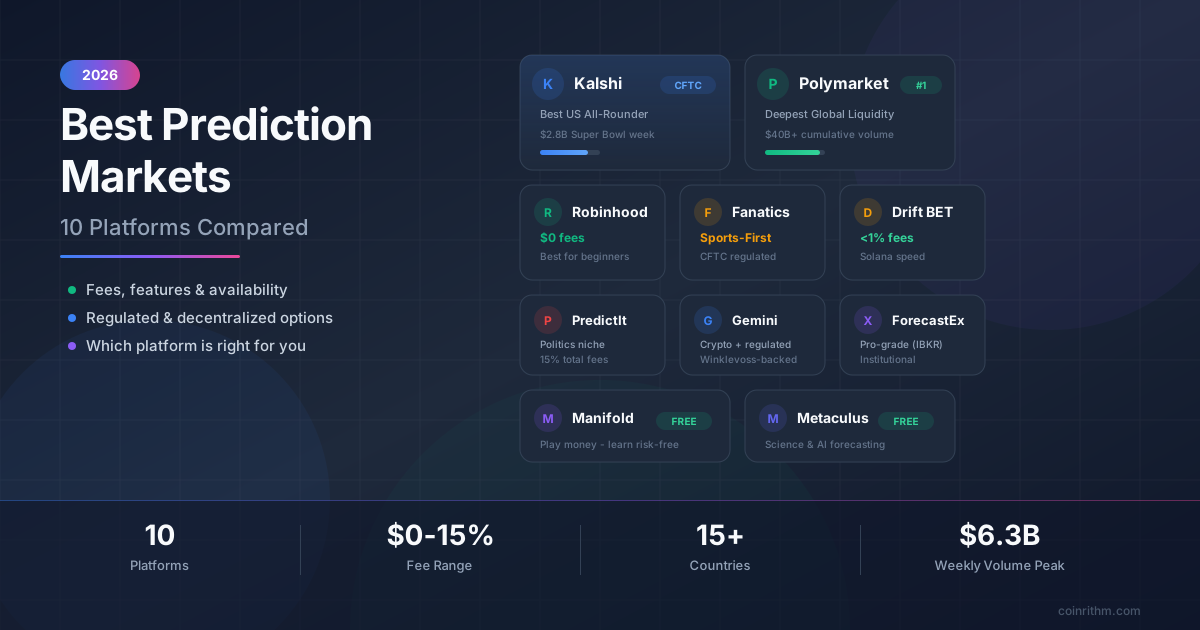
1. Regulated platforms
These are more common in the US and tend to emphasize:
- fiat deposits
- regulatory oversight
- clearer onboarding for non-crypto users
Examples include:
2. Decentralized or crypto-native platforms
These are more likely to emphasize:
- stablecoin funding
- wallet-based access
- on-chain settlement
- broader global reach
Examples include:
If you already know you want a platform recommendation, go straight to Best Prediction Markets in 2026.
Why Prediction Markets Matter in 2026
Prediction markets have moved from niche curiosity to a more mainstream information product.
Why this matters now:
- Google is increasingly surfacing prediction-market data in search contexts.
- Major event cycles like the FIFA World Cup 2026 and US Midterms create fresh demand.
- Polymarket, Kalshi, and related platforms are attracting more attention from media, traders, and researchers.
- Crypto users are using these markets not just to speculate, but to track narrative risk around Bitcoin, Ethereum, regulation, and macro events.
For CoinRithm, this matters because prediction-market searchers often overlap with users interested in:
- crypto price research
- event-driven market views
- watchlists
- portfolio context
- risk-free trading practice before risking capital
How to Research Prediction Markets with CoinRithm
CoinRithm Prediction Markets works best as a research and discovery layer. If you want to move from the category explainer into platform research quickly, open Prediction Market Sources and the compare page next.
Use it to:
- see what markets are active
- compare categories like politics, crypto, sports, and finance
- review price movement before opening a trade elsewhere
- discover themes worth tracking on related coin pages
- browse platform-specific hubs: Polymarket, Kalshi, Manifold
- explore by topic: elections, crypto, sports
- follow crypto news for context on events prediction markets are pricing
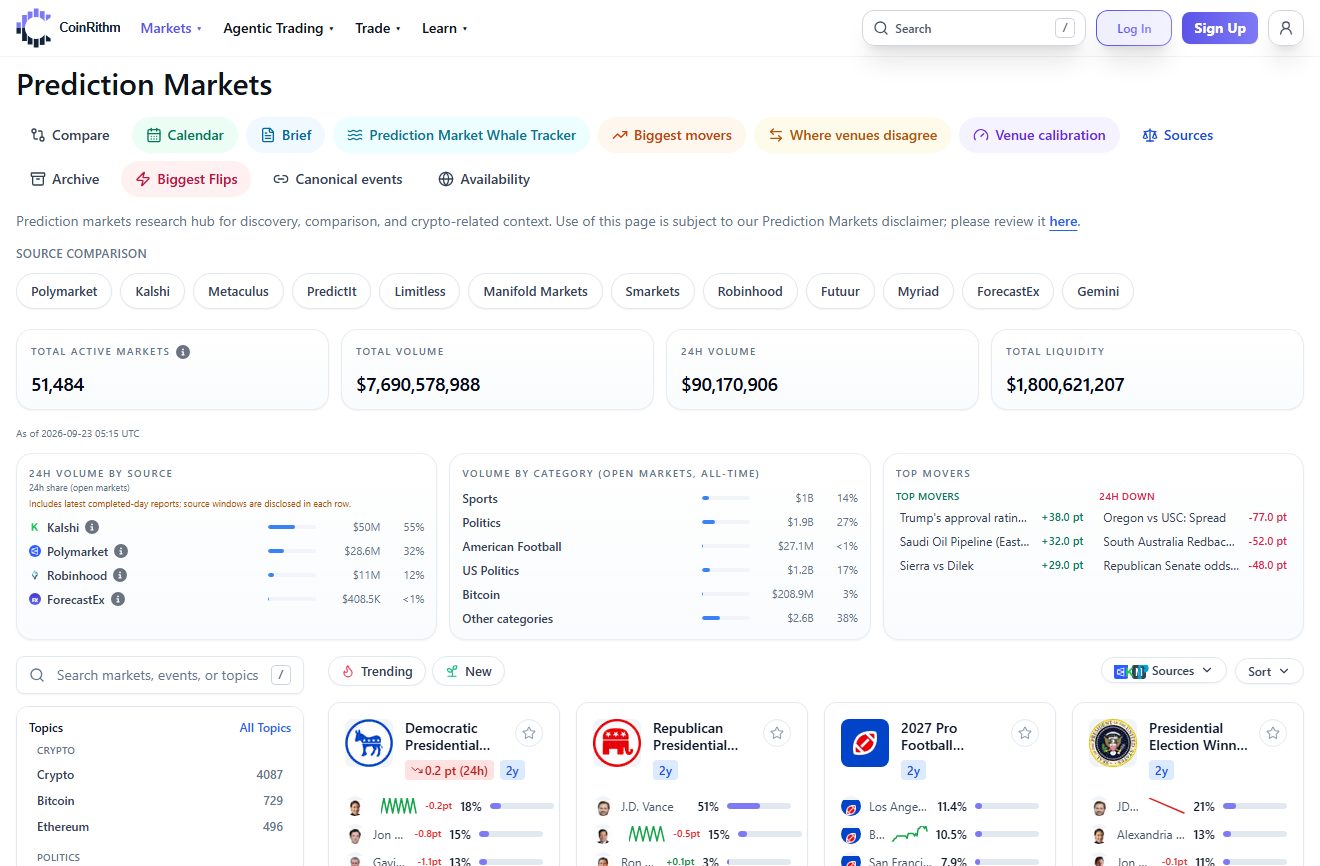
Use CoinRithm to research live markets before choosing a platform or taking a position.
A practical workflow:
- Start on CoinRithm Prediction Markets.
- Filter to the category you actually understand.
- Check whether the market is liquid enough to trade cleanly.
- Read the market question and resolution source carefully.
- Only then decide whether to trade on a platform like Polymarket or Kalshi.
This is also where the content hub matters:
- if you need platform help, read Best Prediction Markets in 2026
- if you need a Polymarket-specific breakdown, read What Is Polymarket?
- if you are choosing between the two most searched platforms, read Kalshi vs Polymarket
- if you are stuck on prices and odds, read How Prediction Market Probabilities Work
- if you mostly care about costs, read Prediction Market Fees Comparison
- if you are mainly worried about legality and access, read Are Prediction Markets Legal in the US?
Common Risks and Beginner Mistakes
Prediction markets look simple, but beginners usually lose money for basic reasons, not clever ones.
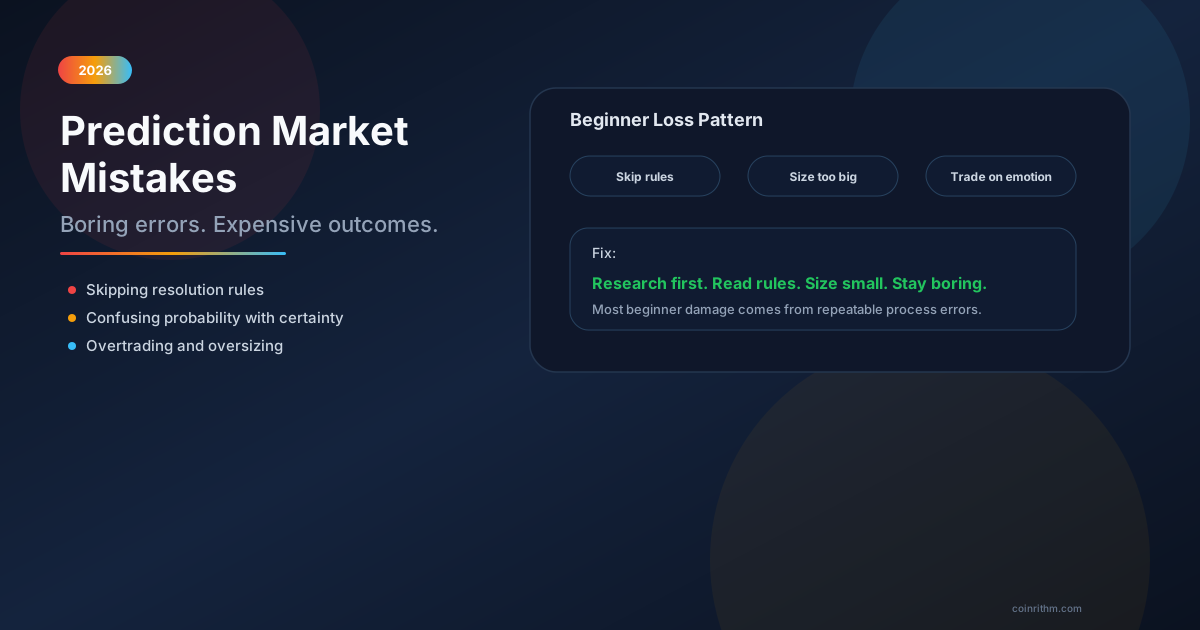
The most common mistakes are:
- treating price as certainty
- ignoring resolution rules
- trading markets with weak liquidity
- using too much size on one event
- confusing “interesting” with “edge”
- chasing headlines after the price has already moved
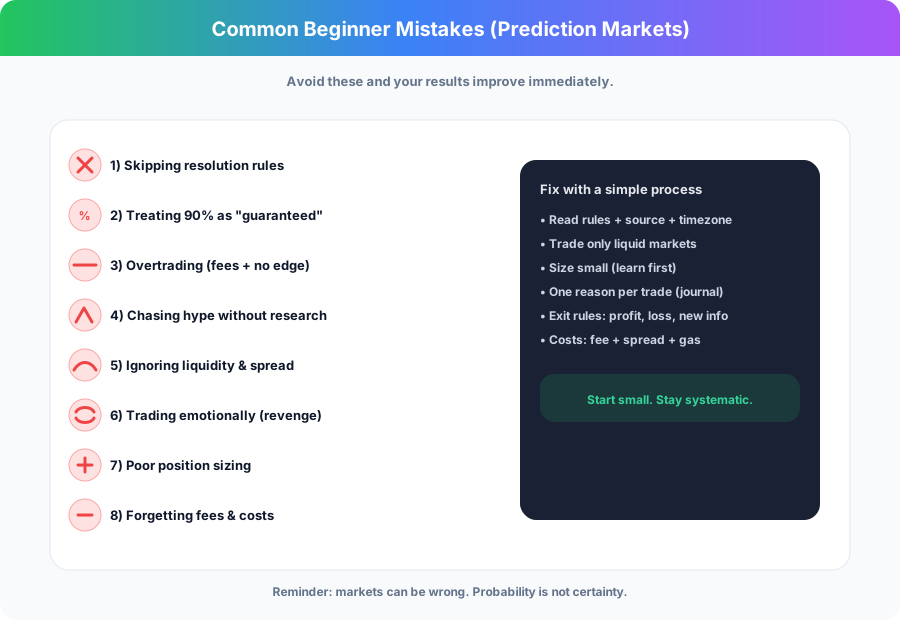
Most beginner losses come from poor process, not bad luck alone.
Best-practice rules:
- stay small while learning
- focus on markets you can actually follow
- read the rules before every trade
- understand the fee model
- avoid impulsive size increases after one win
Prediction Market Legality and Safety Basics
This topic changes over time, so treat any summary as a starting point, not the final word.
At a high level:
- some platforms are regulated and country-specific
- some are crypto-native and globally accessible in many places
- legality can vary by country and sometimes by state
- platform availability, KYC rules, and product offerings can change fast
Safety is also layered:
- platform risk
- regulatory risk
- smart contract or oracle risk
- liquidity risk
- user error
If the main thing you care about is “Is this safe or legal where I live?” that deserves its own page. For now, the safe beginner rule is simple: verify access, rules, and fees directly with the platform before funding an account or wallet.
What to Read Next
Pick the next page based on your intent:
- You want the broad platform comparison: Best Prediction Markets in 2026
- You want the biggest crypto-native platform explained: What Is Polymarket?
- You want the head-to-head platform decision page: Kalshi vs Polymarket
- You want the prices/odds explainer: How Prediction Market Probabilities Work
- You want the fee comparison page: Prediction Market Fees Comparison
- You want the US legality explainer: Are Prediction Markets Legal in the US?
- You want the beginner-risk page: Common Prediction Market Mistakes
- You want to browse live markets first: CoinRithm Prediction Markets
- You want to practice market thinking before risking money: CoinRithm Paper Trading — spot, futures up to 20x, and prediction market mock stakes
- You want to see how AI agents trade: Agent Arena — public leaderboard of AI agents (a human leaderboard is coming soon)
- You want AI agents to trade for you: Agentic Trading
Frequently Asked Questions
Are prediction markets the same as gambling?
Not exactly. They overlap in the sense that money is at risk on uncertain outcomes, but prediction markets are also used for probability discovery, research, and hedging. The structure, pricing, and platform model can differ significantly from traditional betting.
What is the main crypto connection in prediction markets?
The crypto connection usually comes through wallet-based access, stablecoin funding such as USDC, and on-chain settlement. That is why platforms like Polymarket are often grouped with crypto-adjacent tools and users.
Do I need crypto to use prediction markets?
No. Regulated platforms like Kalshi and Robinhood Prediction Markets use fiat funding. Crypto-native platforms usually require a wallet and stablecoins on a specific chain.
Are prediction market prices always accurate?
No. They are useful estimates, not guarantees. Prices can be distorted by thin liquidity, bad assumptions, manipulation attempts, or fast-moving news.
What is the best prediction market for beginners?
That depends on location and comfort level. Beginners who want regulated fiat onboarding may prefer Kalshi or Robinhood. Users who want the largest crypto-native ecosystem usually start with Polymarket. For a broader comparison, read Best Prediction Markets in 2026.
Can prediction markets help with crypto research?
Yes, especially around event-driven topics like rate decisions, elections, ETF news, regulation, and Bitcoin or Ethereum price milestones. They are best used as one input inside a larger research workflow, not as a complete system by themselves.
Conclusion
Prediction markets are one of the clearest ways to see how crowds price uncertainty in real time.
That matters for:
- elections
- macro events
- sports
- crypto narratives
- risk management around event-driven moves
If you are new, the best move is not to rush into a trade. First understand:
- how prices map to probabilities
- how resolution rules work
- which platform type fits your situation
- where the crypto-specific risks begin
Start with research, not action.
Use CoinRithm Prediction Markets to see what is active, then use the What to Read Next section above to move into the right comparison, legality, pricing, or platform page.
Last Updated: March 30, 2026
Disclaimer: This article is for educational and informational purposes only. It is not financial, legal, or investment advice. Prediction markets involve real financial risk, and regulations can vary by jurisdiction. Always verify platform availability, fees, and legal access directly before trading.