The short answer is: yes, some prediction markets are legal in the United States, but the rules depend heavily on the platform, the contract type, and the current regulatory posture.
If you are searching for are prediction markets legal in the US, is Kalshi legal in the US, or is Polymarket legal in the US, this is the main legal explainer for that cluster.
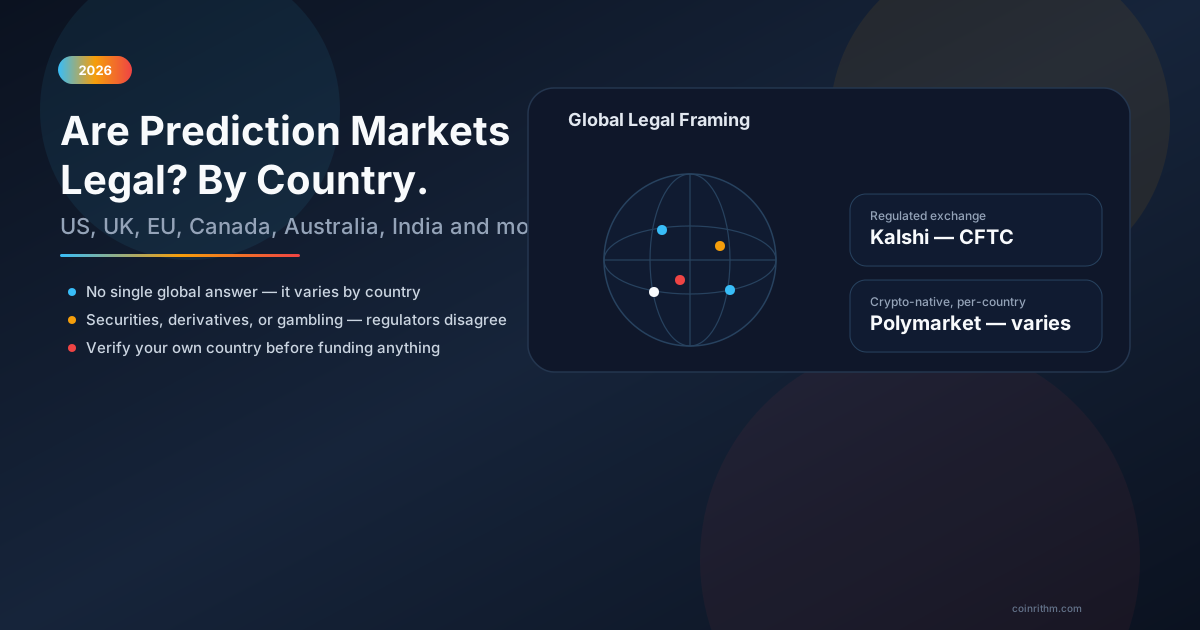
That is where many beginners get confused. “Prediction markets” sounds like one thing, but in practice the US legal picture is different for a regulated platform like Kalshi than for a crypto-native platform like Polymarket.
This guide explains the current US legal framing in plain English. It is not legal advice. The goal is to help you understand the structure well enough to avoid obvious mistakes before funding an account or wallet.
If you need the category explainer first, read What Are Prediction Markets in Crypto?. If you are deciding between the two most searched names, read Kalshi vs Polymarket.
TL;DR
- Some prediction markets are legal in the US.
- The CFTC is the key federal regulator for US event-contract markets.
- Kalshi has the clearest regulated-US story in this category.
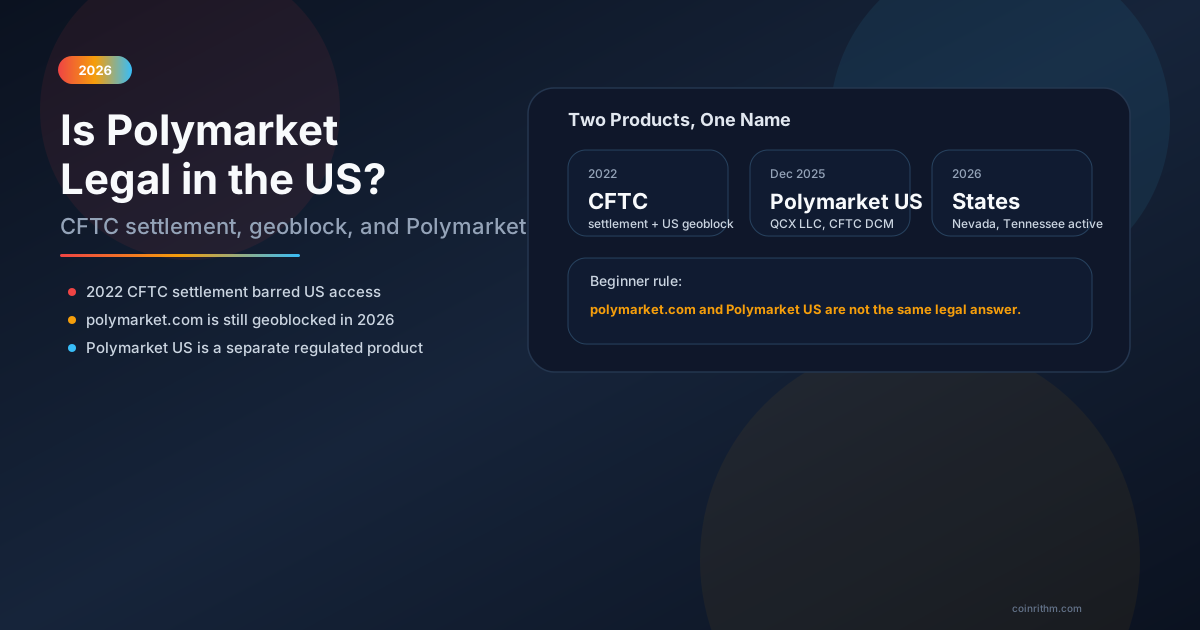
- Polymarket is the more complicated case for US users: its main site, polymarket.com, is close-only for them, and US residents trade on Polymarket US, a separate CFTC-regulated app with its own accounts.
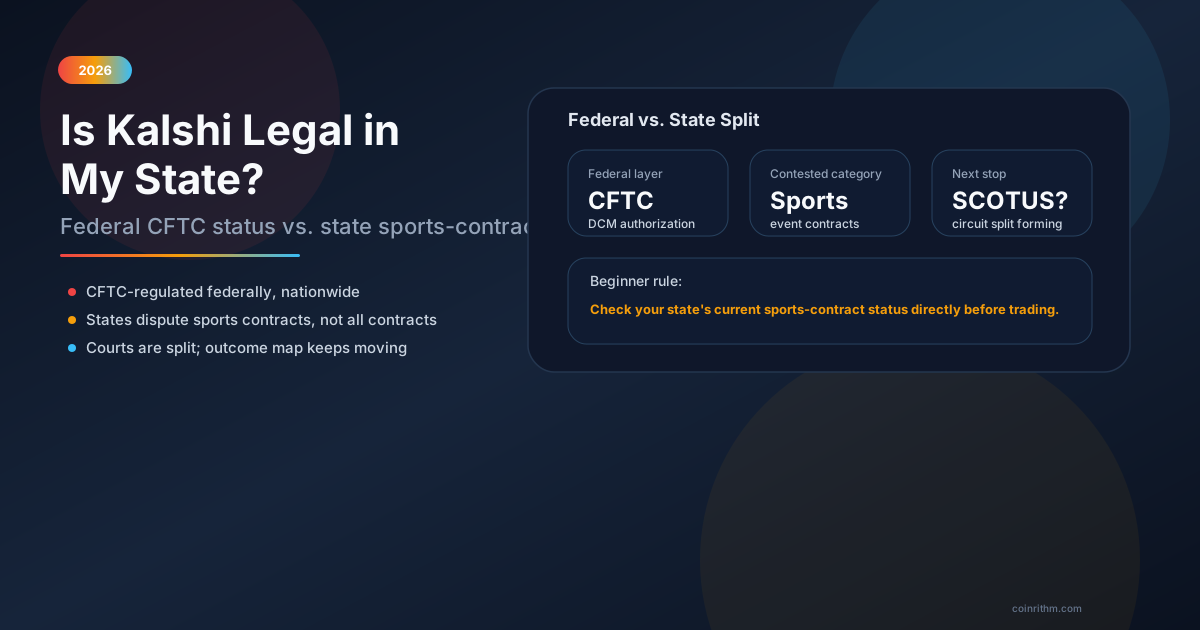
- State-level disputes can still matter, especially around sports-related contracts. As of September 2026, court orders require Kalshi to geofence some contract types in Nevada and Michigan.
- Always verify current platform access and restrictions yourself before trading.
Short Answer
If you want the simplest version:
- Yes, prediction markets can be legal in the US.
- No, that does not mean every platform or every contract is equally available to every US user.
The clean beginner distinction is:
- Kalshi is the clearest regulated-US example.
- Polymarket is the more legally sensitive and access-sensitive example for US users: its main site, polymarket.com, is close-only for them, and US residents use a separate CFTC-regulated app, Polymarket US.
That is the main point to understand first.
Why the US Legal Picture Is Confusing
People often mix together:
- regulated event contracts
- sports betting
- political wagering
- crypto-native prediction markets
- platform access questions
Those are related, but they are not identical.
The confusion gets worse because:
- federal jurisdiction is part of the story
- state regulators still try to assert their own position in some disputes
- sports contracts can trigger more legal friction
- crypto-native platforms are not the same legal product as regulated US event exchanges
So when someone asks:
“Are prediction markets legal in the US?”
the honest answer is not one word. It is:
“Some are, under some structures, and you need to know which platform you are talking about.”
What the CFTC Does Here
The Commodity Futures Trading Commission is the key federal regulator in this space.
As of February 17, 2026, the CFTC publicly reaffirmed in a court filing that it has exclusive jurisdiction over U.S. commodity derivatives markets, including event contract markets commonly called prediction markets.
Source: CFTC Press Release 9183-26
Also relevant:
- On February 4, 2026, the CFTC withdrew its prior event-contract rule proposal and a staff sports event contracts advisory.
Source: CFTC Press Release 9179-26 - On February 25, 2026, the CFTC’s enforcement division issued a prediction-markets advisory tied to conduct on Kalshi, reinforcing that these are actively monitored markets.
Source: CFTC Press Release 9158-26
In plain English, that means:
- the federal government is treating US prediction markets as a real regulated market category
- this is not a fringe gray area in the same way people casually assume
- but not every platform sits inside that framework in the same way
Kalshi: The Clearest Regulated US Example
For beginners, Kalshi is the easiest legal example to understand.
Why:
- it is a regulated US event-contract platform
- it is designed around US users
- its onboarding and compliance flow fit the regulated model clearly
Kalshi’s own help materials and announcements say:
- it is available to US residents, as an event contracts exchange authorized to operate in the United States under CFTC oversight
- it is now accessible internationally, except in the restricted jurisdictions listed in Section VI of its Member Agreement (55 in the version dated 20 September 2026), and users still need to ensure their own access is lawful in their jurisdiction
Sources:
- Kalshi News: authorized to operate in the United States (June 18, 2026)
- Kalshi Help: Can I trade on Kalshi from outside the United States?
- Kalshi Help: Signing up as an individual
So if a beginner asks:
“What is the clearest legally structured prediction-market option in the US?”
the practical answer is usually:
Kalshi
That does not mean zero controversy. It means the legal structure is much clearer than it is for crypto-native alternatives.
Polymarket: Why the US Answer Is More Complicated
Polymarket should not be explained to US beginners as if it were a single product with a single legal posture.
Treating it that way would be sloppy.
Why it is more complicated:
- its main site, polymarket.com, is crypto-native and is close-only for US users: they can close existing positions but cannot open new ones (Polymarket Terms of Use, 11 August 2026)
- US residents instead trade on Polymarket US, a separate app run by QCX LLC d/b/a Polymarket US, a CFTC designated contract market, with accounts that are not connected to polymarket.com
- US access has been more sensitive historically
- “available on the internet” is not the same thing as “equally straightforward for US compliance purposes”
So Polymarket now has a CFTC-regulated route for US residents, but it is a separate, newer product, not the Polymarket most international coverage describes. That still does not make it the same clean beginner legal story as Kalshi. Is Polymarket Legal in the US? covers the split in detail.
So the practical beginner rule is:
- if legal clarity in the US is your top concern, start by understanding Kalshi first
- if you are researching Polymarket, verify current access and restrictions directly before funding anything
This is also why CoinRithm should treat Polymarket as:
- an important platform
- a major traffic/citation topic
- but not a page that should overstate legal certainty for US users
Why State Issues Still Matter
Even with strong federal CFTC framing, state-level conflict still matters.
That is especially true around sports-related event contracts.
For example:
- the CFTC’s February 17, 2026 court filing directly pushed back on efforts to treat these markets as if states, rather than the CFTC, controlled the jurisdiction
- as of September 2026, court orders require Kalshi to geofence some contract types in Nevada and Michigan, and, according to trade-press reports, a Washington state-court order has had Kalshi geofencing sports, election and several other contract categories there since August 2026
- the Polymarket US App Store listing says trading is currently unavailable in Nevada
- that tells you the legal conversation is active, not settled
So beginners should understand:
- “federally regulated” does not mean “no disputes exist”
- access can still vary by contract type, platform, or geography
- you should never assume all event contracts are available to you just because one headline says prediction markets are legal
What Beginners Should Actually Do
If you are in the US and want to avoid obvious mistakes:
- Start with the platform that has the clearest regulated-US structure.
- Verify current access before deposit or signup.
- Read the platform’s help center, terms, and current restrictions.
- Be extra careful around sports-related contracts and state-specific questions.
- Do not treat old social-media takes as reliable legal guidance.
The best beginner interpretation:
- Kalshi = clearest US legal structure
- Polymarket = higher need for direct verification before action
That does not make Polymarket unimportant. It just means the legal explanation needs to be more careful.
How CoinRithm Fits In
CoinRithm is useful here because it helps you research markets before you make a platform decision.
Use CoinRithm Prediction Markets to:
- see what markets are active
- understand what category you care about
- research market context before funding anything
Then move to the right next page:
-
if you want the practical access view: US availability
-
if you want the platform directory: Prediction Market Sources
-
if you want to compare platforms side by side: Prediction Market Compare
-
if you want the category overview: What Are Prediction Markets in Crypto?
-
if you want the platform head-to-head: Kalshi vs Polymarket
-
if you want the broad platform list: Best Prediction Markets in 2026
That is a safer beginner workflow than jumping straight from headline curiosity to a funded trade.
Frequently Asked Questions
Are prediction markets federally legal in the US?
Some are, and the CFTC has recently reaffirmed its jurisdiction over US event-contract markets. But that does not mean every platform or every contract is equally straightforward for every US user.
Is Kalshi legal in the US?
Kalshi is the clearest regulated-US example in this category and is the easiest platform to point to for beginners who want a compliant-looking US structure. As of September 2026, court orders require it to geofence some contract types in Nevada and Michigan.
Is Polymarket legal in the US?
That is the more complicated question, because there are two products. The main site, polymarket.com, is close-only for US users (Terms of Use, 11 August 2026). US residents trade on Polymarket US instead, a separate app run by a CFTC designated contract market, whose App Store listing says trading is currently unavailable in Nevada. Verify current access and restrictions directly before using it.
Does state law still matter?
Yes. State-level disputes can still matter, especially around sports-related event contracts. As of September 2026, court orders require Kalshi to geofence some contract types in Nevada and Michigan, and Polymarket US lists trading as unavailable in Nevada.
Is this article legal advice?
No. It is an educational summary designed to help beginners understand the structure of the issue and avoid obvious confusion.
Conclusion
Prediction markets are not simply “legal” or “illegal” in the US in one universal sense.
The better summary is:
- the category itself has real federal-regulatory footing
- the CFTC is actively asserting jurisdiction
- Kalshi is the clearest US beginner example
- Polymarket requires more caution and direct verification for US users: polymarket.com is close-only for them, and Polymarket US is the separate CFTC-regulated app for US residents
That is the most useful beginner understanding in 2026.
Start with research, not assumptions.
Use CoinRithm Prediction Markets to understand the market landscape first, then move into the right comparison or platform article before you fund anything.
Next Step
Need the broad platform comparison? Read Best Prediction Markets in 2026.
Need the direct head-to-head between the two most searched names? Read Kalshi vs Polymarket.
Need the Polymarket-specific access view? Read Polymarket Countries and Availability.
Want to browse markets before choosing a platform? Start on CoinRithm Prediction Markets.
Last Updated: September 23, 2026
Disclaimer: This article is for educational and informational purposes only and is not legal advice. Laws, regulations, platform access rules, and enforcement positions can change. Always verify current eligibility and legal status directly before trading.