Quel est le prix actuel de Global Dollar ?
Le prix actuel de Global Dollar est 0,8914 € avec un changement de 0,01 % au cours des dernières 24 heures.
Données d'offre et ATH/ATL fournies par CoinGecko

Contrats perpétuels Hyperliquid uniquement. Un relevé toutes les 5 minutes, jusqu’à 20 niveaux de prix par côté. La liquidité au-delà est inconnue. Ce n’est ni une carte des liquidations ni une estimation d’exécution.
Chargement des relevés…
Prix et notionnels sont en unités de plateforme équivalentes à l’USD, avec garantie en USDC. Aucune conversion monétaire n’est appliquée. Notionnel = prix de plateforme × quantité d’actif de base. Spécifications des contrats
Données dérivées et écosystème associé, avec dates et couverture.
Global Dollar (USDG) est un stablecoin adossé à de la monnaie fiduciaire, indexé un pour un sur le dollar américain et émis par Paxos Digital Singapore Pte. Ltd., une Major Payment Institution supervisée par la Monetary Authority of Singapore. Chaque token est remboursable auprès de Paxos contre un dollar américain, et les réserves sont placées sur des comptes ségrégués, en liquidités et en instruments équivalents à des liquidités, avec des rapports mensuels et des attestations indépendantes. USDG est l'actif de règlement du Global Dollar Network, un consortium dans lequel les revenus de la réserve sont partagés avec les entreprises qui distribuent le token.
Ressources officielles :
USDG a été créé par Paxos, l'entreprise régulée d'infrastructure blockchain fondée en 2012 par Charles Cascarilla et Rich Teo, qui émet également Pax Dollar, PayPal USD et Pax Gold. Paxos a annoncé USDG et le Global Dollar Network en novembre 2024, avec un lancement depuis Singapour aux côtés de plateformes d'échange et de fintechs partenaires. USDG a ensuite été lancé dans l'Union européenne via Paxos Issuance Europe, sous supervision finlandaise. Paxos a pour sa part converti en décembre 2025 son agrément de trust de l'État de New York en un agrément de trust national supervisé par l'Office of the Comptroller of the Currency des États-Unis.
Le mécanisme est identique à celui des autres stablecoins régulés adossés à de la monnaie fiduciaire. Un client agréé envoie des dollars à Paxos, Paxos émet des USDG sur la blockchain demandée, et le remboursement inverse le processus en brûlant les tokens. Les réserves sont ségréguées plutôt que mêlées aux fonds propres, et Paxos ne pratique pas la réserve fractionnaire. La couche qui distingue le projet est commerciale : selon le modèle du Global Dollar Network, l'essentiel des revenus de la réserve revient aux partenaires qui détiennent et font circuler l'USDG, au prorata des encours qu'ils apportent.
USDG est un instrument de paiement et de règlement, et non un token de gouvernance ou de rendement. Il déplace de la valeur en dollars entre plateformes d'échange et portefeuilles, et sert à coter et à régler des transactions et des paiements. USDG lui-même ne verse aucun intérêt. Toute rémunération perçue par un utilisateur provient d'un partenaire distributeur qui partage sa part des revenus du réseau, et non du token.
C'est l'économie de la réserve qui fait la différence. Plutôt que de laisser l'émetteur conserver le rendement, le réseau en redistribue la majeure partie aux plateformes qui portent l'adoption. Cela donne aux plateformes d'échange et aux portefeuilles une raison financière directe de promouvoir USDG plutôt que ses concurrents, ce qui est inhabituel sur un marché où les acteurs établis s'appuient sur les effets de réseau liés à la liquidité.
USDT et USDC sont des tokens adossés à de la monnaie fiduciaire qui conservent les revenus de la réserve chez l'émetteur, avec une liquidité bien plus profonde et un historique plus long. La base réglementaire d'USDG est d'abord singapourienne, avec une entité émettrice distincte dans l'UE. Face à des tokens adossés à du collatéral comme USDS ou DAI, il offre un droit de remboursement juridique direct auprès d'un émetteur régulé, mais aucune transparence on-chain sur les actifs et aucune gouvernance décentralisée.
La sécurité comporte deux niveaux. Sur le plan juridique, la réserve est ségréguée, l'émetteur est soumis à une supervision prudentielle à Singapour et des comptables indépendants délivrent une attestation chaque mois. Sur le plan technique, USDG est un contrat de token open source standard sur chaque chaîne, le déploiement Ethereum utilisant un proxy évolutif. Comme pour les autres stablecoins régulés, l'émetteur peut geler des adresses en réponse à une décision de justice.
La concurrence entre stablecoins s'est jouée pour l'essentiel sur la confiance et la liquidité. USDG l'aborde par l'économie, en transformant le rendement de la réserve en incitation pour les distributeurs plutôt qu'en profit pour l'émetteur.
USDG est disponible sur les plateformes d'échange centralisées reliées au Global Dollar Network, ainsi que sur les plateformes d'échange décentralisées des chaînes où il est déployé. Les clients institutionnels agréés peuvent émettre et rembourser directement auprès de Paxos, au pair.
USDG est un token standard sur chaque réseau : un portefeuille EVM couvre donc les déploiements Ethereum, Arbitrum, Ink et X Layer, et un portefeuille Solana gère la version SPL. Ajoutez le token via son adresse de contrat vérifiée pour la chaîne concernée. Un USDG détenu sur une chaîne n'est pas utilisable sur une autre sans un bridge pris en charge.
Suivez le prix en direct de Global Dollar, son graphique, sa capitalisation et son volume en temps réel. Pratiquez le mock trading et le demo trading de Global Dollar sur CoinRithm avant d'utiliser de l'argent réel.
Utilisez un compte de paper trading crypto pour faire du demo trading de Global Dollar avec des prix en temps réel, du feedback IA et des ligues de trading. Testez des stratégies, apprenez la gestion du risque et gagnez en confiance avant de trader Global Dollar avec de l'argent réel.
Lire le guide complet du paper tradingLe prix actuel de Global Dollar est 0,8914 € avec un changement de 0,01 % au cours des dernières 24 heures.
Le volume d’échange quotidien est 4 170 103 € représentant un changement de 19,03 % au cours des dernières 24 heures.
La capitalisation boursière de Global Dollar est 2 790 022 230 €, classé #31 mondialement.
La valorisation totalement diluée (FDV) de Global Dollar est 2 790 022 305 €, calculée en supposant une offre totale de 3 129 890 881 USDG.
En circulation : 3 129 890 796. Total : 3 129 890 881. Maximum : N/A.
Au cours des dernières 24 heures, Global Dollar s’est échangé entre un minimum de 0,8913 € et un maximum de 0,8917 €.





 USDG/USDTTether USDT1,00 USDT
The early-access feature uses automatic USDG loans at 50% initial loan-to-value, with non-USDG deposits capped at $20,000 per account.

ETH and USDG swaps use NEAR Intents to handle cross-chain routing, while bridge infrastructure still moves assets between networks.
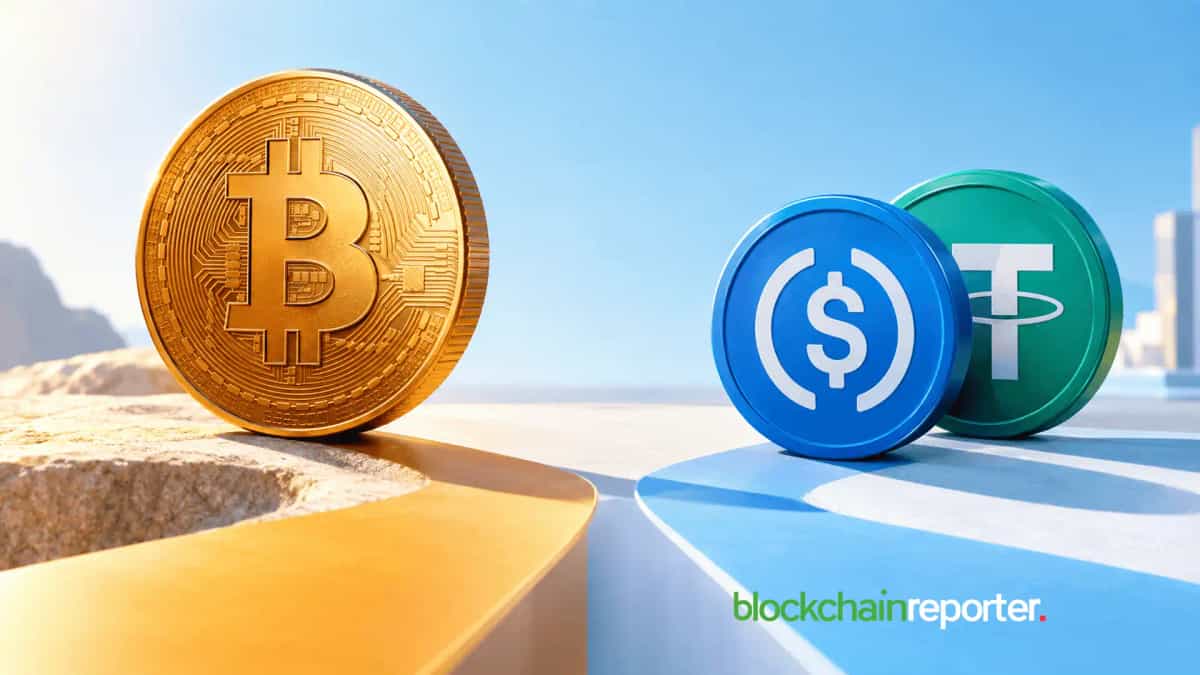
Arbitrum joined the Global Dollar Network, making Paxos-issued USDG the default dollar for lending, trading and settlement across its Ethereum layer-2 ecosystem.

The Ethereum layer-2 is backing Paxos-issued USDG to earn a share of reserve income as new stablecoin alliances compete for distribution, users and reserve economics.
OKX Money lets users fund stablecoin accounts with 50+ currencies, earn up to 10% on eligible USDG and spend with no FX fees.

The stablecoin goes live on Arbitrum One with Fluid, Morpho, GMX, Maple and Kraken behind it. A proposal published the same day asks ArbitrumDAO to add 100 million ARB to an incentive program that still has about 63.7 million ARB unspent