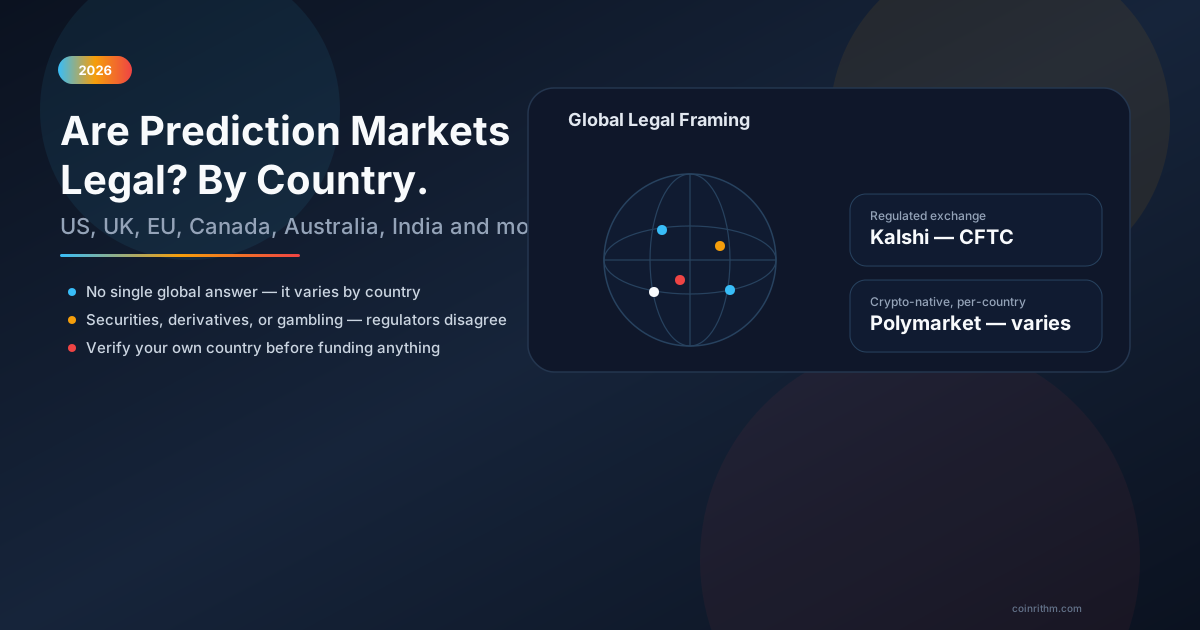
People ask "are prediction markets legal in Europe?" expecting a yes or a no. There is no single answer, because there is no single Europe — legally speaking. The European Union does not have one prediction-market law; instead, twenty-seven member states each regulate betting and gambling their own way, the EU layers crypto rules on top through a separate framework, and the venues themselves draw their own maps of who they will serve. The honest answer to prediction markets europe is "it depends on your country, the venue, and how the market is structured" — and this guide explains the parts that actually matter.
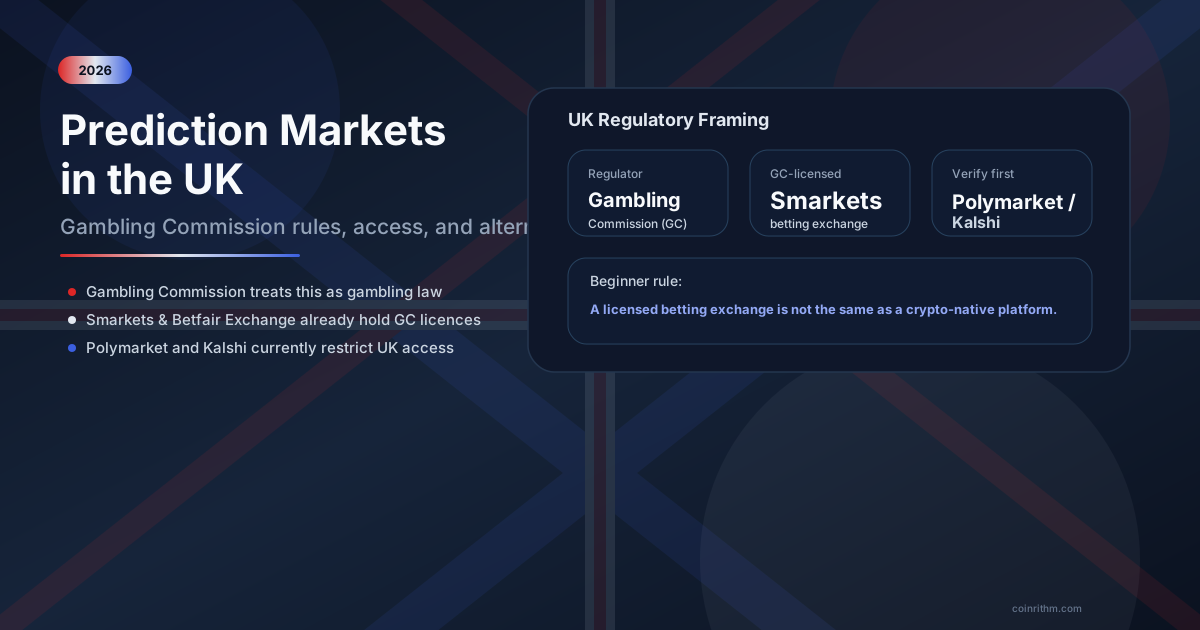
This is general information, not legal advice: rules change and access varies, so verify the current position in your own country before acting. For the wider picture, our are prediction markets legal guide covers the global landscape, and prediction markets in the UK handles Britain specifically — which, post-Brexit, sits outside the EU frameworks below.
TL;DR
- There is no EU-wide prediction-market regime. Betting and gambling are regulated nationally, so the rules differ across Germany, France, Italy, the Netherlands, Spain, and every other member state.
- The EU's crypto framework (MiCA) governs crypto-assets — it does not create a licence or regime specifically for prediction markets.
- Many crypto-native real-money venues geoblock or restrict EU users, operating in a grey zone rather than under a European licence.
- Some regulated betting exchanges offer event and politics markets in certain countries under national gambling licences.
- Most US-regulated venues are US-only. Kalshi is the main exception: it accepts users from many countries, but its Member Agreement (20 September 2026) restricts several European ones, including France, Italy and Ireland, and its availability in Germany and the Netherlands is not verified, because their gambling regulators treat unlicensed prediction markets as illegal.
- CoinRithm is a data and paper-trading platform — study the markets from anywhere, with no real-money access and nothing to comply with on your side.
Why there is no single "European" rule
The instinct to look for an EU-level answer is reasonable — the EU harmonises a lot — but gambling is a deliberate exception. Under EU law, member states retain the right to regulate betting and gambling themselves, subject to broad principles like non-discrimination and free movement. The result is a patchwork: each country runs its own regulator, its own licensing regime, and its own rules about what may be offered and to whom.
That is why the same venue can be legal, restricted, or blocked depending on which side of a border you sit. A "prediction market" that pays out on real-world events looks, to a national regulator, a lot like betting — so whether it is permitted, and under what licence, is a national question. There is no European passport that lets one prediction-market operator serve the whole bloc the way a bank or a crypto firm can under EU financial rules.
Where MiCA fits — and where it does not
Since the EU rolled out MiCA (the Markets in Crypto-Assets regulation), people reasonably assume it must cover crypto-based prediction markets. It largely does not, and the distinction matters.
MiCA regulates crypto-assets — issuance, stablecoins, and the firms that provide crypto services like exchange and custody. A prediction market that happens to settle in a stablecoin touches MiCA only insofar as the crypto parts (holding or exchanging the token) are involved. MiCA does not create a bespoke authorisation for running a market on the outcome of real-world events; that activity still falls under national gambling or financial-instrument law, depending on how the contract is characterised. So "it uses crypto, therefore MiCA makes it legal in the EU" is a category error. The crypto rails may be MiCA-relevant; the market on the event is governed elsewhere.
What actually reaches European users
In practice, Europeans encounter prediction markets in three broad forms, each with a different legal footing.
Crypto-native venues, often geoblocked
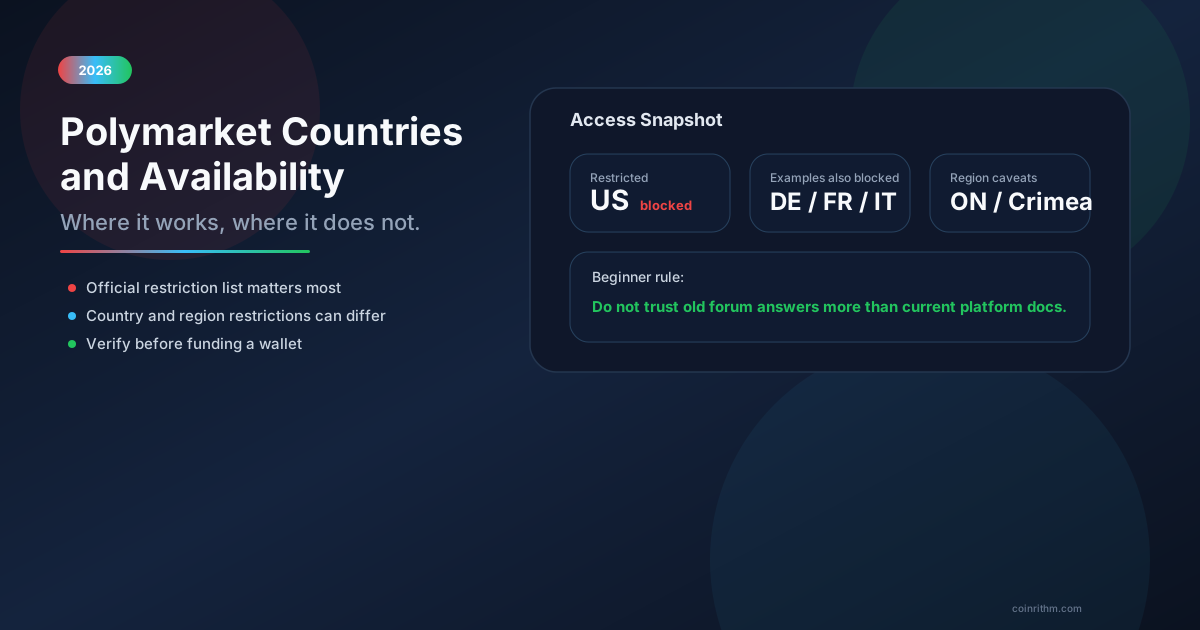
The best-known crypto prediction markets — the large on-chain venues — frequently restrict or block users in many jurisdictions, including parts of Europe, rather than holding national gambling licences across the bloc. Access can hinge on your location, and it changes; a venue available one month may restrict a country the next as regulators engage. Treat availability as something to verify at the source, not assume, and be wary of workarounds that put you on the wrong side of a venue's terms or your national law. Our Polymarket countries and availability guide illustrates how granular and changeable this can be for one venue.
Licensed betting exchanges
Some regulated betting exchanges offer markets on politics, entertainment, and other events in countries where they hold a national gambling licence. These operate squarely inside the local regulatory regime — with the consumer protections, and the geographic limits, that come with it. Availability of event and political markets specifically varies by country and over time, because some regulators permit sports but restrict political betting.
US-regulated exchanges: generally not available
Most venues regulated as exchanges in the United States are US-only. Gemini Predictions and the separate Polymarket US app, for example, accept US users only, so for European users they are out of reach regardless of the local European position. Their existence is useful context for how a regulated prediction market can look, but not an access route from Europe.
Kalshi is the main exception. Since its October 2025 international launch it has accepted users from many countries, but its Member Agreement (version dated 20 September 2026) restricts 55 jurisdictions, including France, Italy, Ireland, Belgium, Poland, Portugal, Hungary and Bulgaria inside the EU, plus Switzerland and the UK. Spain is not on that list, but Spain's gambling regulator (DGOJ) opened sanction proceedings against Kalshi in May 2026. Germany and the Netherlands are not on it either, but their gambling regulators treat unlicensed prediction markets as illegal, so Kalshi's availability there is not verified. Check Kalshi Countries and Availability for the current country-by-country picture before assuming either way.
Country by country: the honest short version
Because the rules are national, the specifics differ across the continent, and they move. Rather than assert a fragile status for each country, here is what actually varies and how to check it:
- Germany, France, Italy, Spain, the Netherlands and other member states each have their own gambling regulator and licensing regime, and each treats event and political betting differently — some permit it under licence, some restrict political markets, some tolerate a grey zone. Your national regulator's website is the authoritative source.
- Whether a specific venue serves your country is decided by the venue, not just the law. Check the venue's own terms and its geographic restrictions before assuming access. CoinRithm's availability pages collect each tracked venue's documented status for Germany, France, the Netherlands, Spain, Italy, Ireland and Switzerland.
- How the contract is structured — as a bet, or as a financial instrument — can change which regime applies, and this is unsettled in several countries.
The one durable rule is the boring one: confirm the current position for your country and your chosen venue, from primary sources, before putting money anywhere. Regulatory status is exactly the kind of thing that is out of date the moment anyone writes it down.
How to use CoinRithm from Europe
Here is the part that does not depend on any of the above. CoinRithm is a data and paper-trading platform, not a broker, exchange, or wallet. We aggregate and analyse prediction markets from twelve venues so you can study them; we do not offer real-money betting, so there is nothing for you to comply with to read the data or practise.
From anywhere in Europe you can watch live probabilities on the prediction markets hub, compare how venues price the same question on the compare view, check each venue's fees, settlement, and geographic restrictions on the sources page, and paper-trade with virtual funds to learn how the markets behave before any question of real access arises. It is the safe way to understand prediction markets while the European regulatory picture keeps evolving.
FAQ
Are prediction markets legal in the European Union?
There is no single EU answer. The EU leaves betting and gambling to national regulators, so legality depends on your specific country, the venue, and how the market is structured. Some countries permit event and political markets under a gambling licence; others restrict them. Always verify the current position with your national regulator before acting.
Does MiCA make crypto prediction markets legal in Europe?
No. MiCA regulates crypto-assets and crypto service providers — the token and custody side — not the activity of running a market on real-world event outcomes. That activity still falls under national gambling or financial law. Using a stablecoin does not bring a prediction market under a MiCA licence.
Can I use Polymarket or Kalshi from Europe?
It varies and it changes. Large crypto-native venues frequently geoblock or restrict European jurisdictions rather than holding EU licences, so access depends on the venue's own rules and your location. Kalshi is not US-only: it accepts users from many countries, but its Member Agreement (20 September 2026) restricts France, Italy, Ireland, Switzerland, the UK and several other European countries, and its availability in Germany and the Netherlands is not verified. Check each venue's current terms and geographic restrictions directly, or see CoinRithm's availability pages for your country.
Is there a European prediction market I can legally use?
Some regulated betting exchanges offer event and politics markets in countries where they hold a national gambling licence, operating inside the local regime. What is available depends on your country and changes over time — some regulators allow sports but restrict political markets. Confirm licensing and availability from primary sources for your jurisdiction.
Is it safe to use a VPN to access a blocked venue?
Using a VPN to bypass a venue's geographic restrictions typically violates that venue's terms and may conflict with your national law — and it does not change your legal position. This guide does not recommend it. The compliant way to study these markets from a restricted location is through data and paper-trading platforms like CoinRithm, which carry no real-money access to circumvent.
How can I learn about prediction markets from Europe legally?
Use a data and paper-trading platform. CoinRithm lets you watch live prediction market prices, compare venues, inspect fees and settlement, and practise with virtual funds from anywhere in Europe, with no real-money betting involved — so you can build understanding while the regulatory landscape continues to develop.