If you are searching for common prediction market mistakes, prediction market beginner mistakes, or polymarket mistakes, this page is the practical caution guide.
Most beginners do not lose money on prediction markets because they found an unusually clever market.
They lose money because they repeat a handful of boring mistakes:
- they do not read the rules
- they confuse probability with certainty
- they size too large
- they trade too often
- they chase hype instead of process
This guide breaks down the most common prediction-market mistakes and how to avoid them before they turn into expensive habits.
If you need the broader category explainer first, read What Are Prediction Markets in Crypto?. If you want the Polymarket-specific workflow, read How to Use Polymarket.
TL;DR
- The biggest mistake is not reading the resolution rules.
- A high-probability trade can still lose.
- Illiquid markets can look tradable when they are not.
- Small fee drag matters more than beginners expect.
- Good prediction-market trading usually looks boring and repeatable.
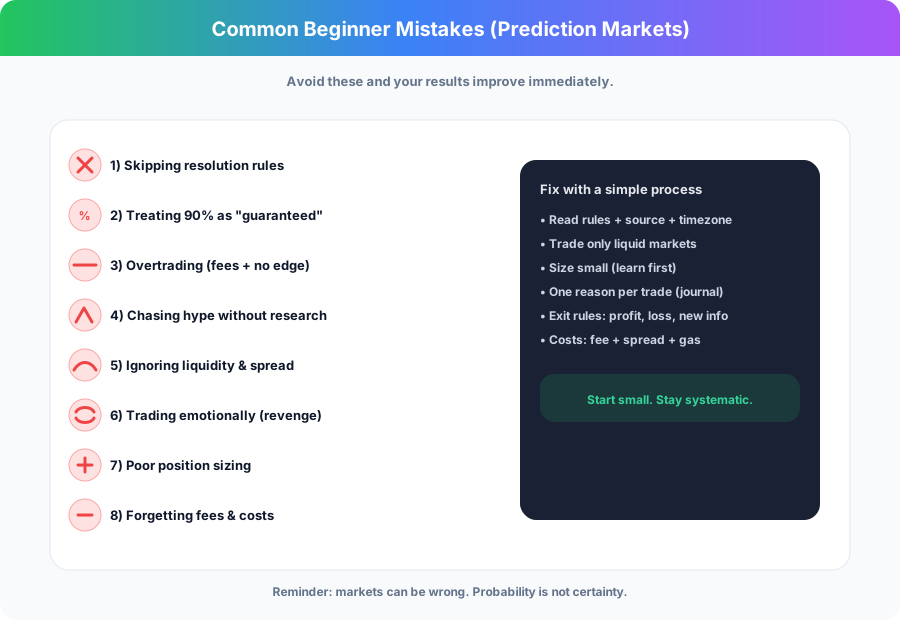
Most beginner losses come from process mistakes, not from one unlucky outcome.
Mistake 1: Not Reading Resolution Rules
This is the biggest mistake in the category.
A market can look simple, but the result depends on:
- the exact wording
- the data source
- the time window
- edge-case definitions
If you skip the rules, you can be “right” in your head and still lose because the market resolves according to a narrower definition.
The fix:
- read the market question carefully
- read the resolution source
- read the timing details
- do not trade if the wording still feels fuzzy
Mistake 2: Treating Probability Like Certainty
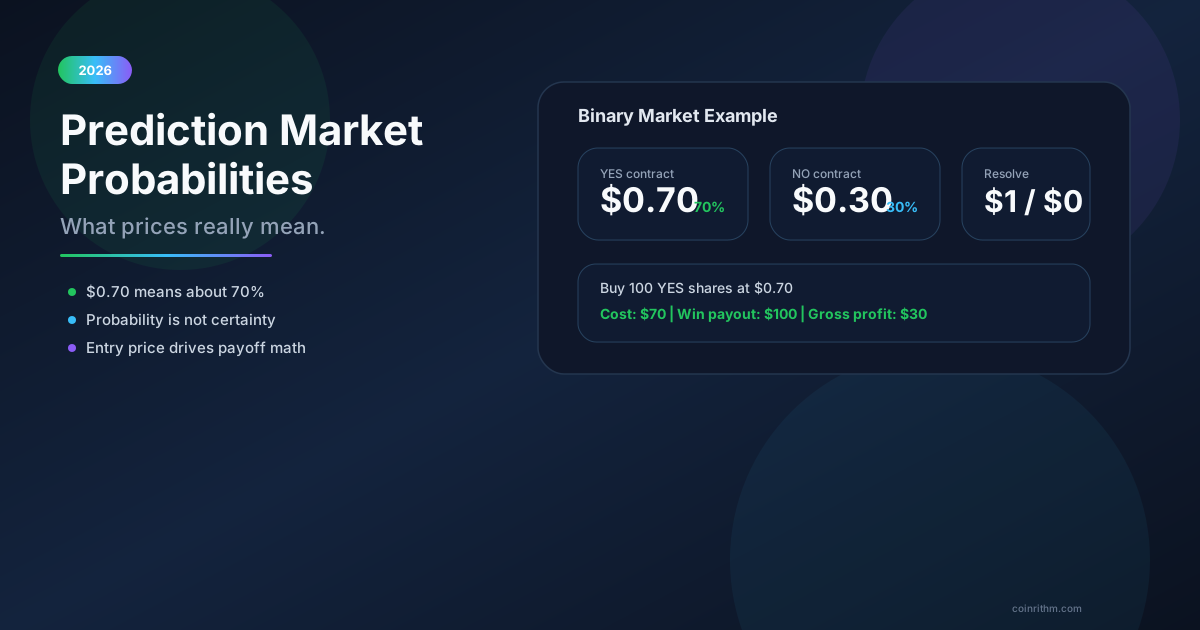
Beginners see 80% or 90% and start thinking “safe.”
That is the wrong mental model.
Probability means:
- likely
It does not mean:
- guaranteed
That is why a high-probability contract can still be a bad trade if:
- the upside is too small
- your size is too large
- the crowd is wrong
If you want the dedicated explainer for this concept, read How Prediction Market Probabilities Work.
Mistake 3: Trading Illiquid Markets
Illiquid markets are dangerous because they can look tradable from the headline alone.
What goes wrong:
- spreads are wider
- price moves are easier to distort
- it is harder to get in and out cleanly
Beginners often underestimate how much bad liquidity can quietly raise their real trading cost.
The fix:
- favor liquid markets first
- do not force trades in thin markets just because the topic is interesting
Mistake 4: Overtrading
Prediction markets reward patience more than most beginners expect.
Overtrading usually comes from:
- boredom
- hype
- wanting action
- trying to “make it back” after a loss
The more often you trade low-quality setups:
- the more fees compound
- the more noise you absorb
- the worse your discipline gets
The fix:
- be selective
- skip mediocre markets
- trade fewer, cleaner setups
Mistake 5: Sizing Too Big
This is where one bad trade turns into emotional damage.
Common beginner mistake:
- a market looks obvious
- the probability looks high
- size goes up too fast
Then the event resolves the wrong way and the loss feels personal.
The fix:
- keep first trades small
- assume you can be wrong
- size so you can still think clearly after a loss
Mistake 6: Chasing Headlines Too Late
By the time a headline feels obvious to everyone, the price often already moved.
That means you may be buying:
- attention
- not edge
The fix:
- ask what the price already reflects
- separate the event from the trade opportunity
- do not confuse “important news” with “good entry”
Mistake 7: Forgetting Fees and Friction
Beginners often focus only on direction and forget the cost of execution.
That includes:
- trading fees
- spreads
- withdrawal friction
- card/deposit friction
- wallet/network overhead
If costs are the main thing you want to understand, read Prediction Market Fees Comparison.
Mistake 8: Treating Prediction Markets Like Easy Money
Prediction markets can be useful for:
- research
- event risk tracking
- information discovery
- selective speculation
They are not a shortcut to easy profit.
That mindset causes:
- sloppy entries
- oversized bets
- poor emotional control
- repeated process mistakes
The better mindset is:
- use markets to think better first
- trade second
How to Build a Better Beginner Process
The best beginner workflow is simple:
- Research the market first.
- Read the rules.
- Check liquidity.
- Understand the price.
- Size small.
- Stay unemotional.
Use CoinRithm Prediction Markets as the research layer before deciding whether a market is even worth your attention.
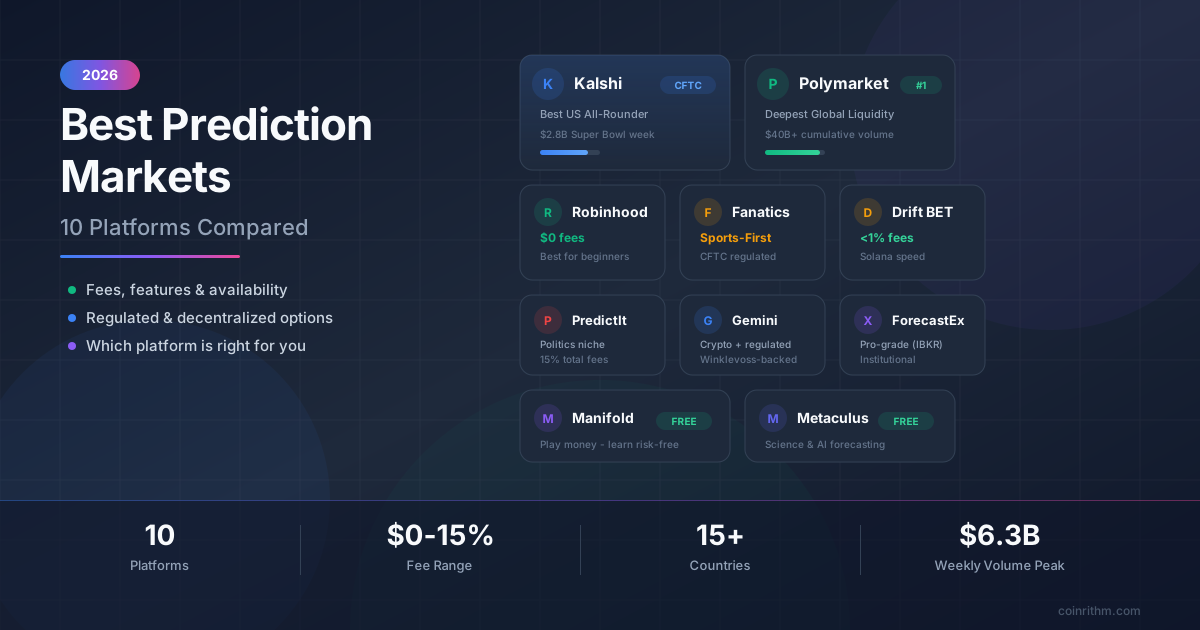
Then narrow the field with the Prediction Market Sources and Compare pages, and check Availability by Country before you assume a platform is usable where you live.
If you want to build process habits before committing real money, CoinRithm's paper trading simulator lets you practice sizing, entries, and exits with no financial risk. That one habit alone improves process more than most people expect.
Frequently Asked Questions
What is the biggest beginner mistake in prediction markets?
Not reading the resolution rules.
Are high-probability markets safer?
Not automatically. High probability does not mean guaranteed, and the risk/reward can still be poor.
Why do beginners lose in prediction markets?
Usually because of process mistakes: bad sizing, weak rule-reading, poor liquidity judgment, overtrading, and emotional decisions.
How do I avoid beginner mistakes?
Slow down, read carefully, trade smaller, and treat the first trades as process training.
Conclusion
Prediction-market mistakes are usually predictable.
That is good news, because predictable mistakes are fixable.
If you:
- read the rules
- respect probability
- avoid thin markets
- size smaller
- trade less often
you are already ahead of a large percentage of beginners.
That does not guarantee profit, but it gives you a much better process.
Next Step
Need the workflow guide? Read How to Use Polymarket.
Need the odds and pricing explainer? Read How Prediction Market Probabilities Work.
Need the fee comparison? Read Prediction Market Fees Comparison.
Want to research live markets before trading anything? Start on CoinRithm Prediction Markets.
Last Updated: March 30, 2026
Disclaimer: This article is for educational purposes only and is not financial advice. Prediction markets involve real financial risk, and even disciplined traders can lose money.